-
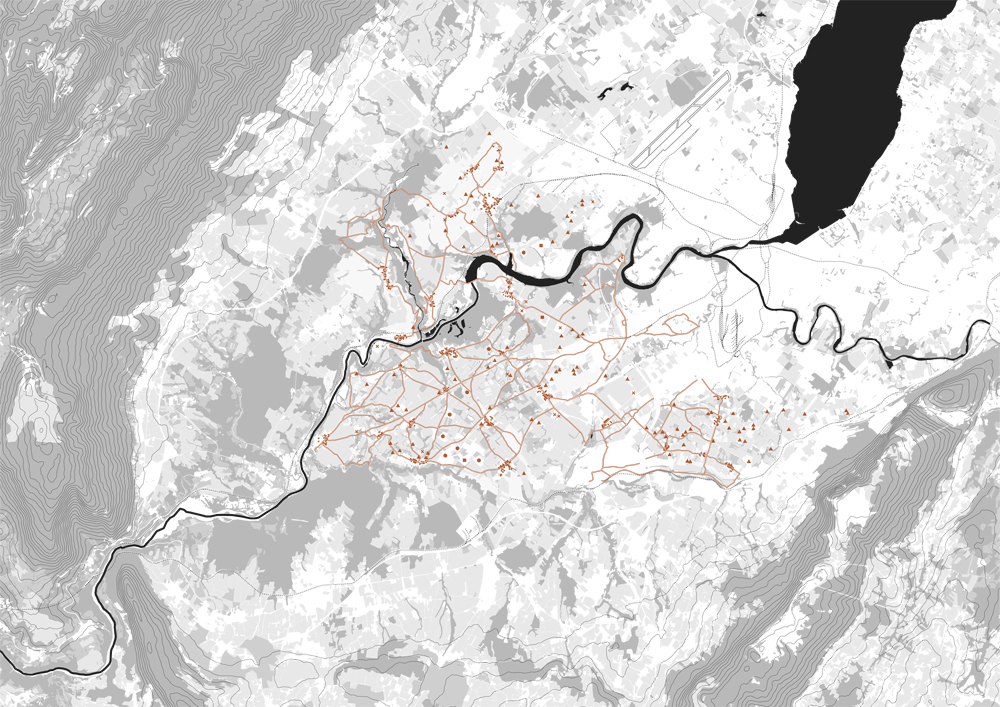
Territorial strategy
-
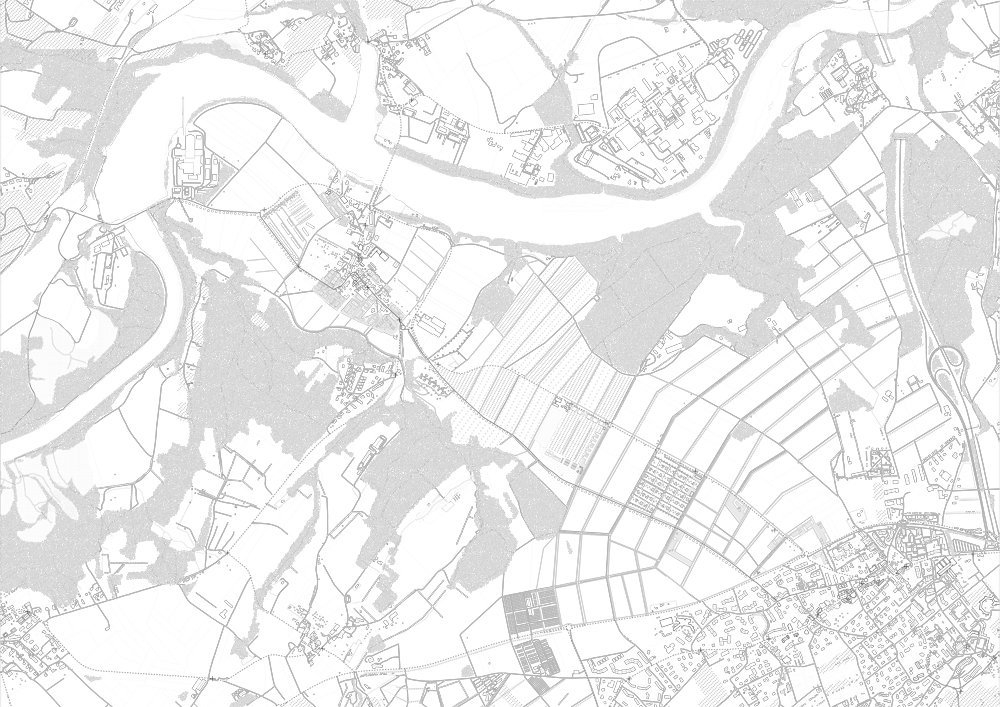
Agrarian urban landscape map
-
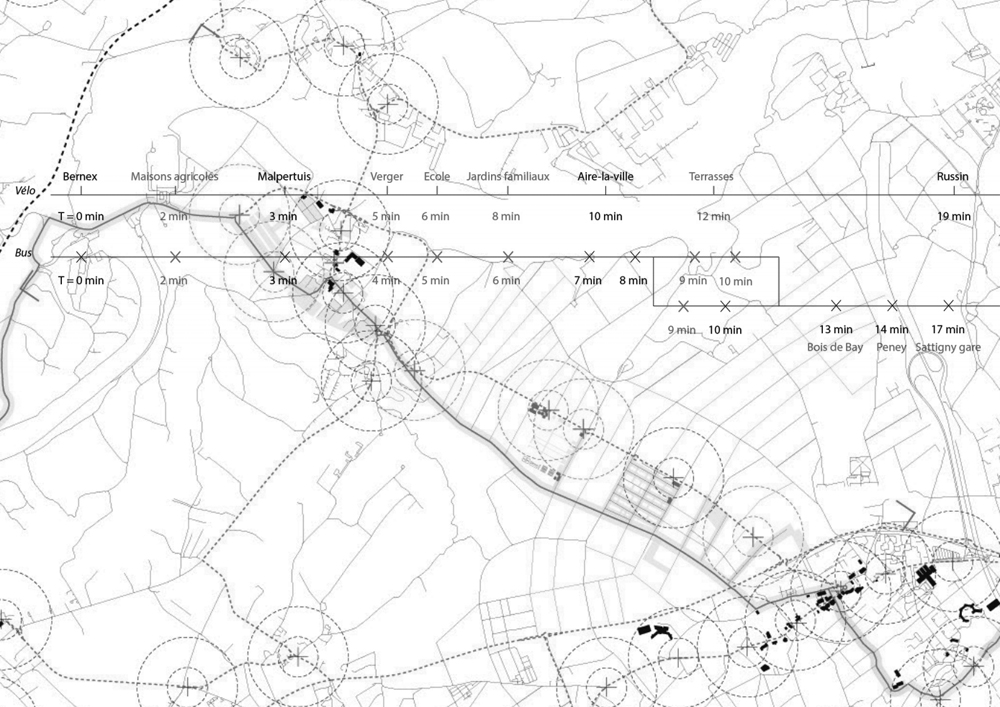
Mobility strategy
-
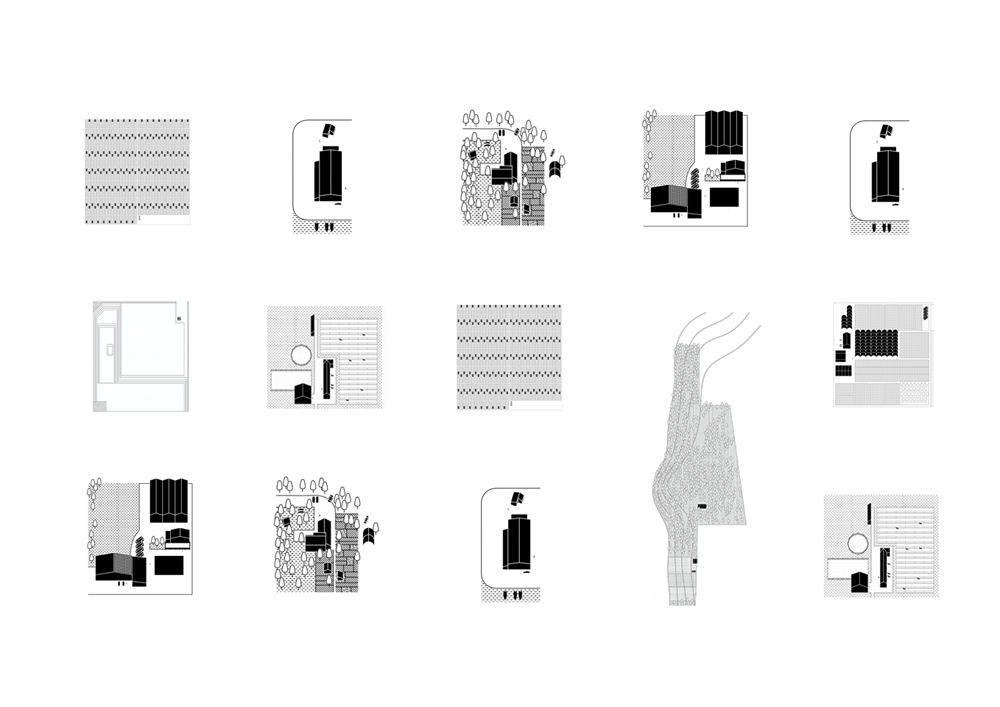
Typology of Geneva countryside
-
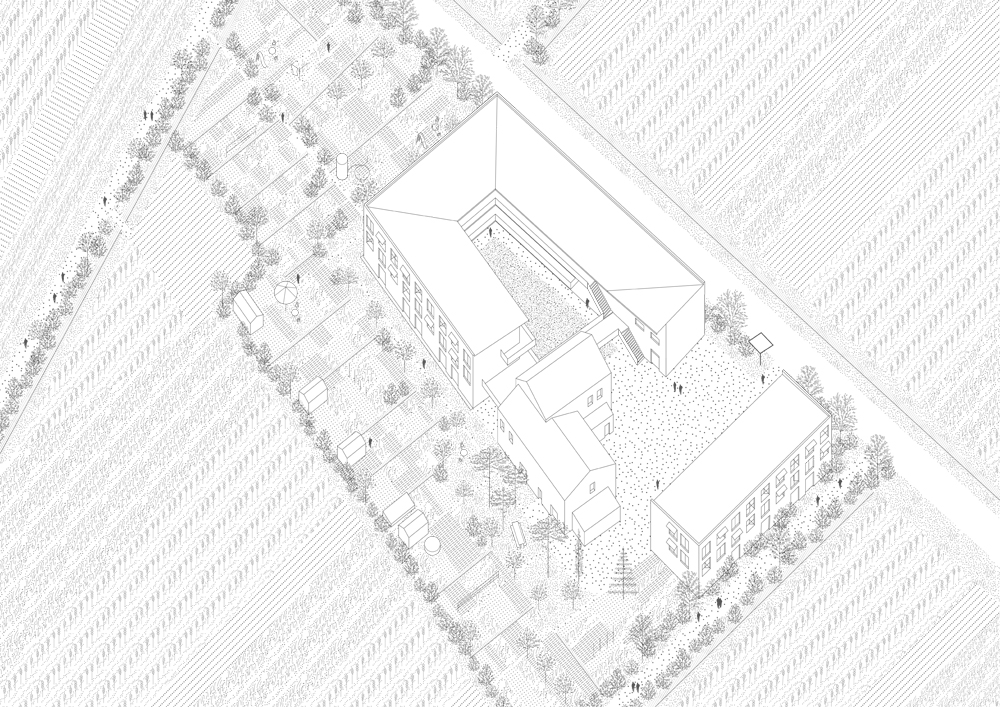
Densifying farmer's house parcels
-
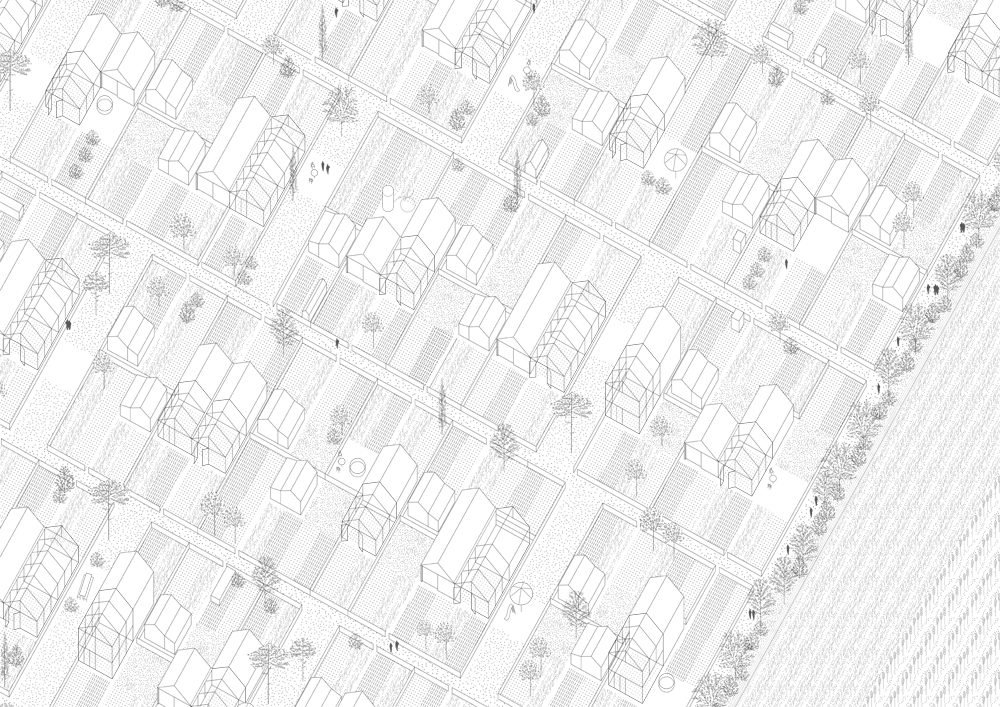
Densifying the community gardens
-
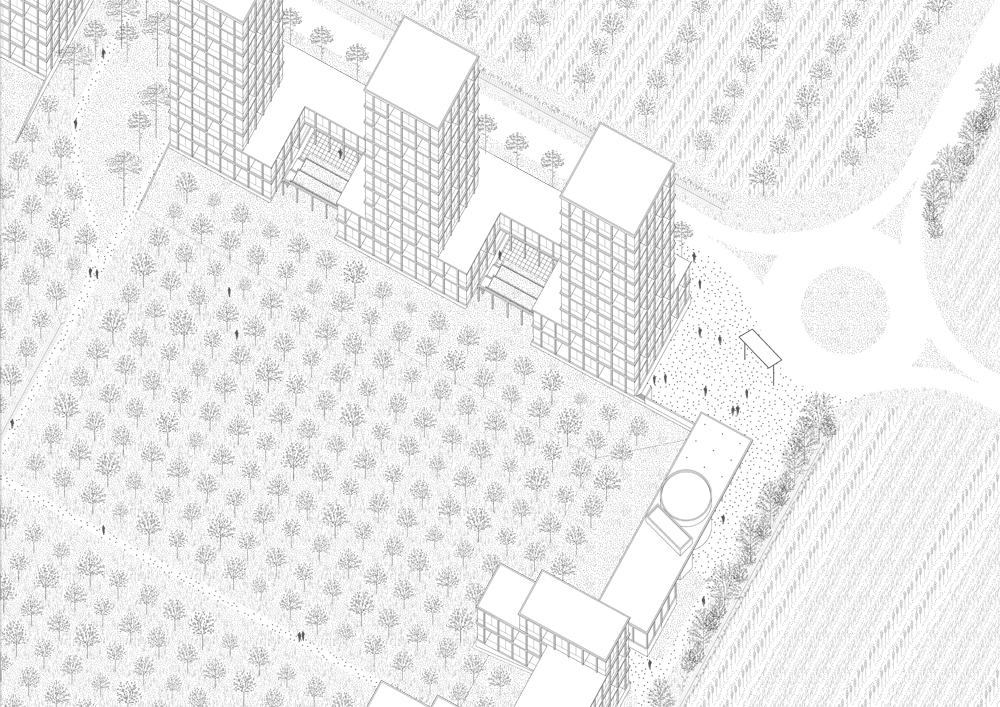
Densifying temporary quarries
-
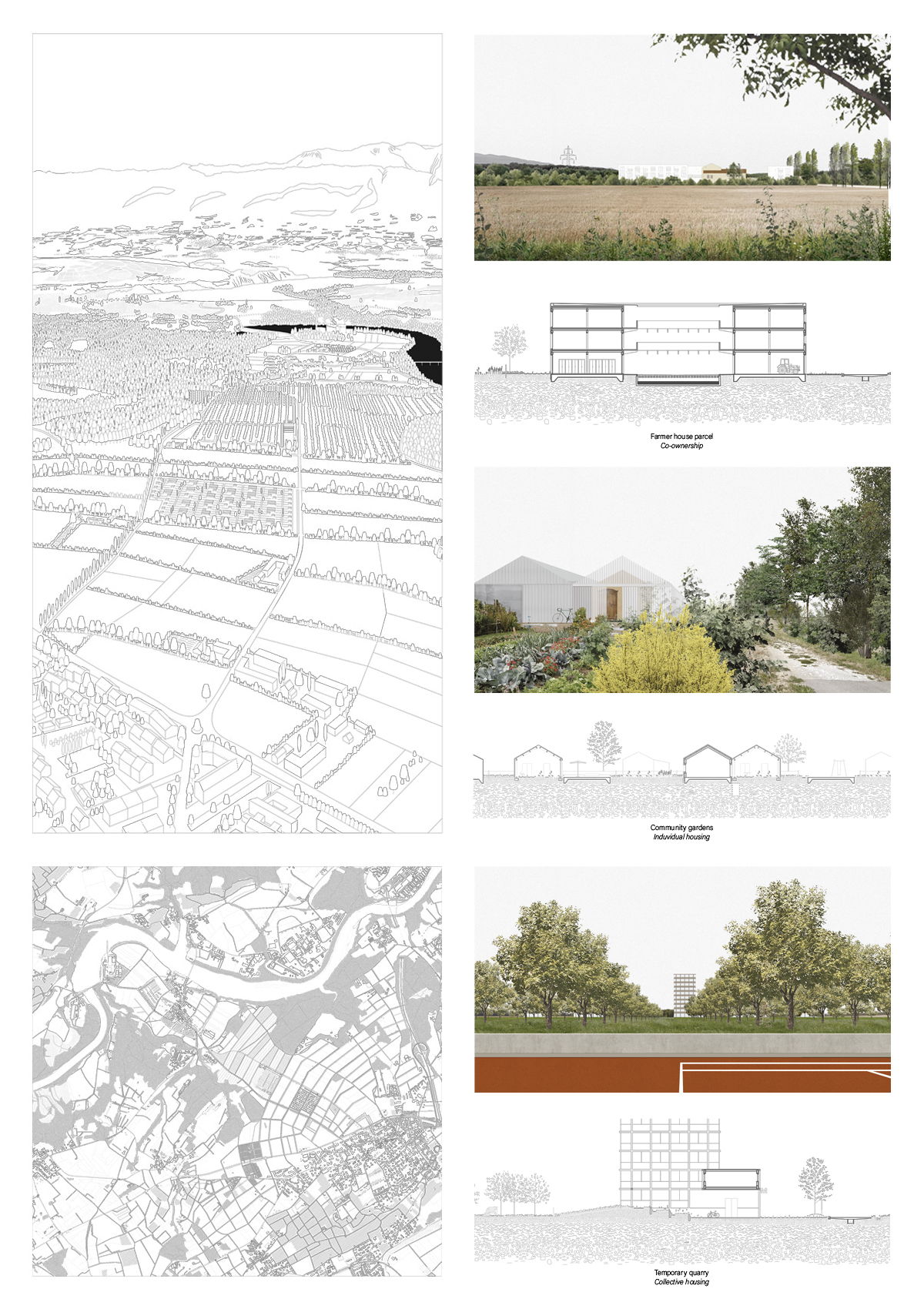
Pannel
-
An agrarian urban landscape for Geneva area
Irène Desmarais. Geneva, Switzerland
-
Name of work in English
An agrarian urban landscape for Geneva area
-
Name of work in original language
An alternative to building the city side by side
Prize year
Young Talent 2020
-
Work Location
Geneva, Switzerland
-
Author/s
Irène Desmarais
-
School
School of Architecture / School of Architecture, Civil and Environmental Engineering - Swiss Federal Institute of technology Lausanne.
Lausanne, Switzerland
Young Talent 2020 YT Open Nominees
An agrarian urban landscape for Geneva area
An alternative to building the city side by side
Program
Urban planning
-
Labels
Redevelopment · Master plan
Aware of both city growth and land preservation problematics, the projet imagines a landscape accommodating inhabitations, soil production, leisure activities and environnement protection.
The project presents itself as an alternative to building the city side by side that consumes productive lands. For this purpose, it is based on both a historical analysis of the territory and Emilio Sereni’s book « il paesaggio agrario italiano » in which the author describes the agrarian landscape as a palimpsest: result of a long accumulation process of projects printed on natural shapes such as topography, hydrography, biology and soil. At the heart of Geneva countryside, intended for food production, this analysis highlights several land opportunities that have lost their initial role devoted to traditional or intensive agriculture. Along a strategic territorial sequence, the project takes advantage of these land/landscape opportunities. It bases the city development on farmers house parcels, community gardens, outskirts of villages and temporary quarries for exemple. All these interventions are linked together by a weak structure like an existing bike path and new vegetation corridors, result of a change of paradigm in the agricultural practice, from quantity to quality concerns. These situations unable the city to grow, distributed in the territory, to shape a new agrarian urban landscape.