-
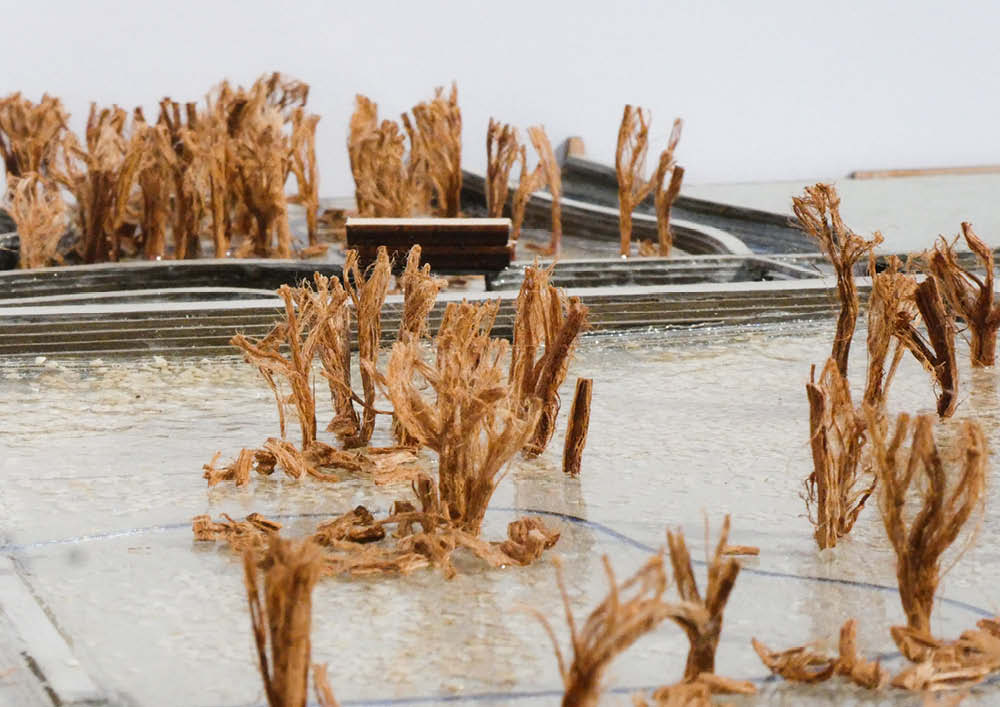
Braiding the Mekong - Urban strategies across scales
-
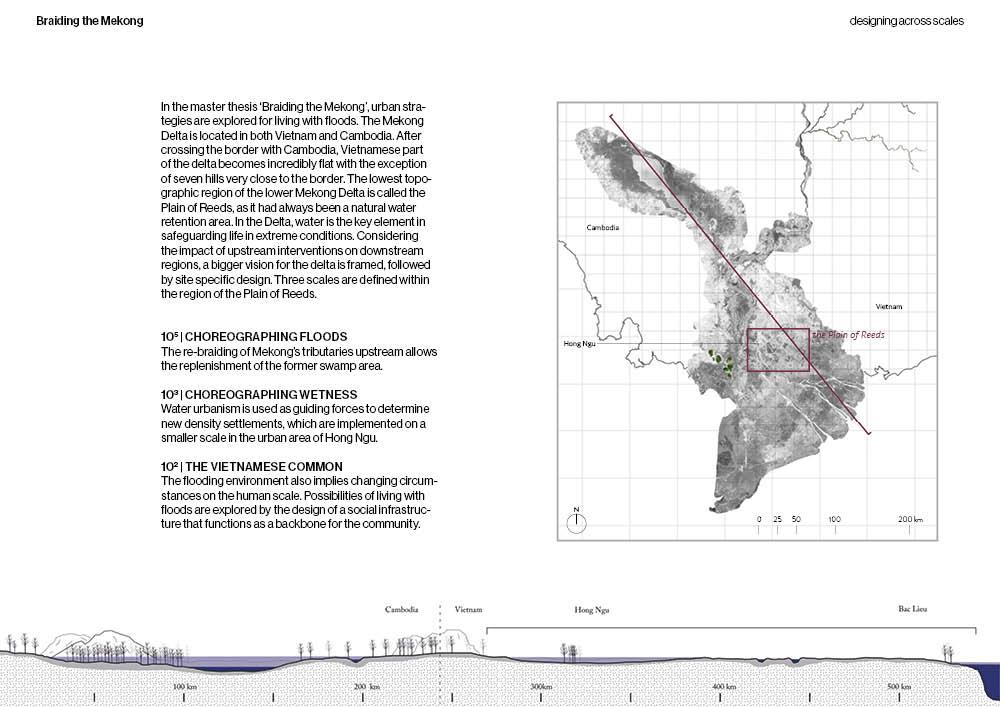
Saving the delta
-
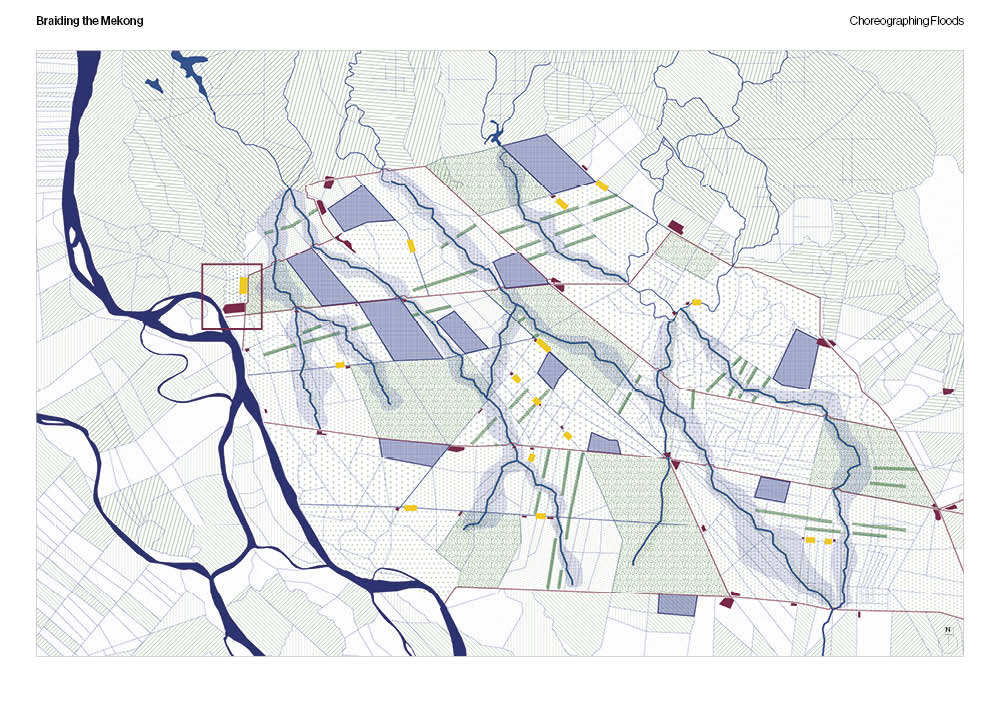
Choreographing Floods
-
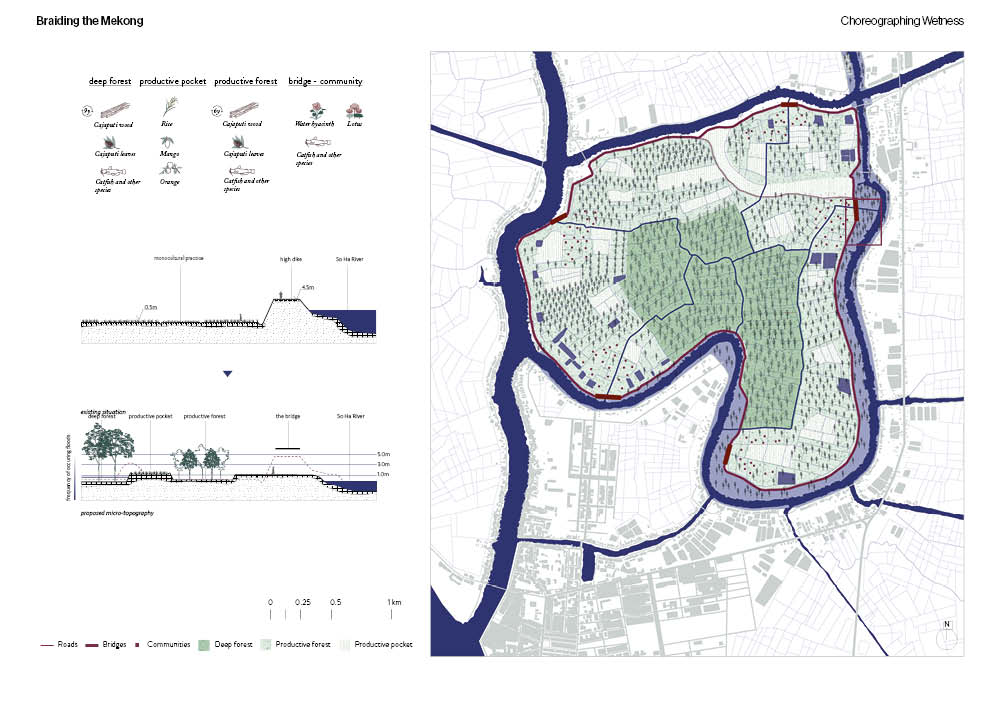
Choreographing Wetness
-
the Vietnamese Common
-
Social infrastructure
-
Fieldwork
-
Braiding the Mekong - Urban strategies across scales
-
Braiding the Mekong
Wouter Geyskens, Olga Konstantinovic.
-
Name of work in English
Braiding the Mekong
-
Name of work in original language
Urban strategies across scales in the Mekong Delta
Prize year
Young Talent 2020
-
Author/s
Wouter Geyskens, Olga Konstantinovic
-
School
Faculty of Engineering Science - Department of Architecture - KU Leuven.
Leuven, Belgium
Young Talent 2020 YT Nominees
Braiding the Mekong
Urban strategies across scales in the Mekong Delta
Program
Mixed use - Infrastructure & Urban
-
Labels
Aggregation · Facilities · Master plan · Structure · Waterfront
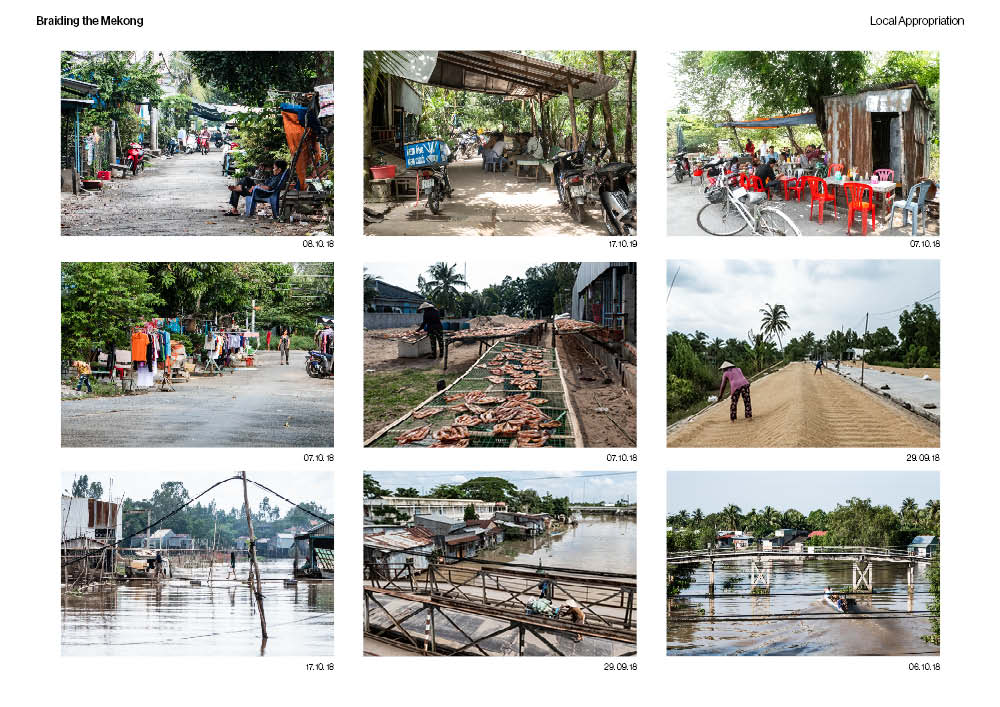
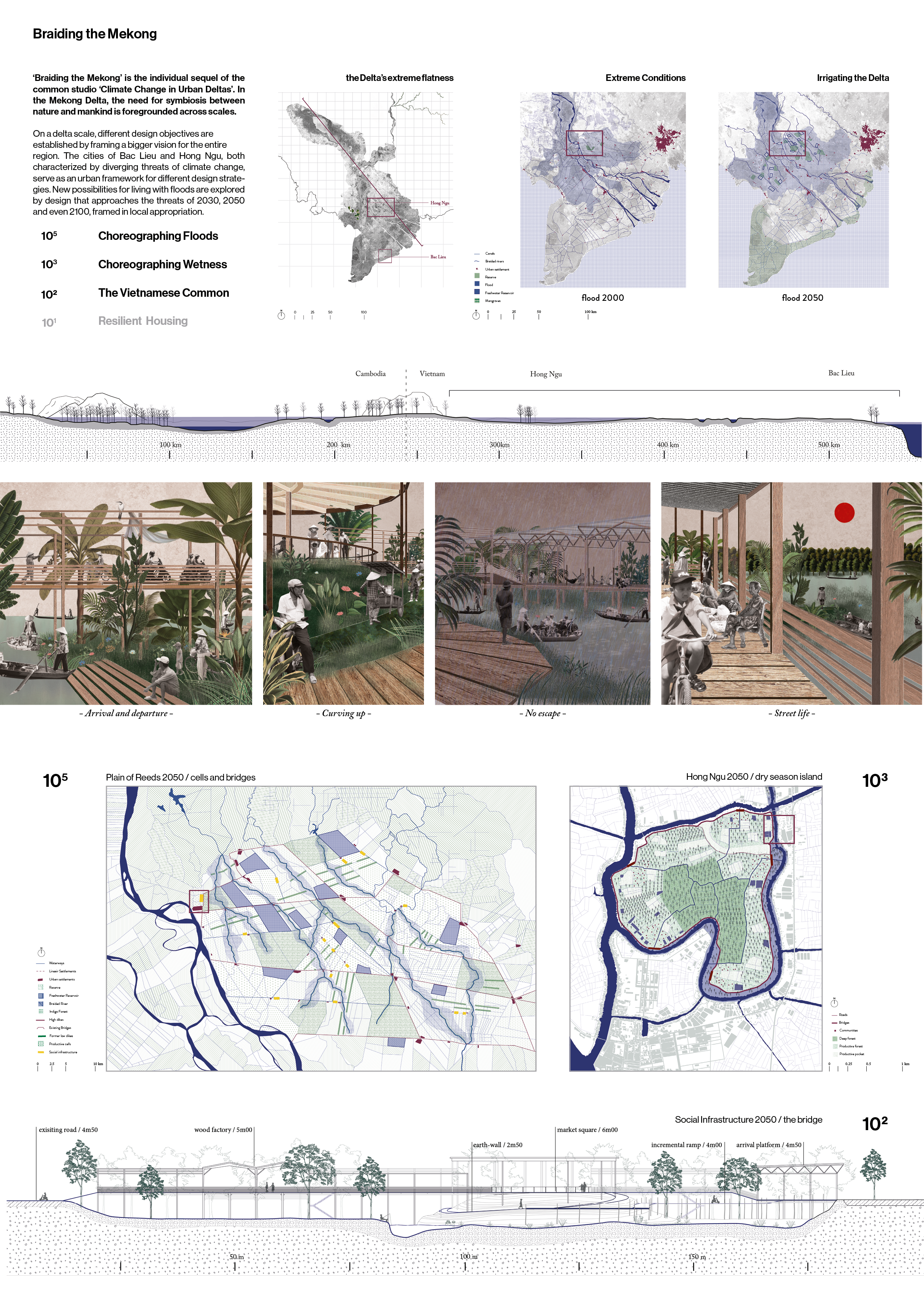
‘Braiding the Mekong’ has the aim to develop design strategies across scales to ensure safer living conditions in the context of climate change. Based on context specific research, our developed ideas provide on macro-scale bold new concepts for inhabiting the territory, while a social infrastructure frames local appropriation on a microscale.
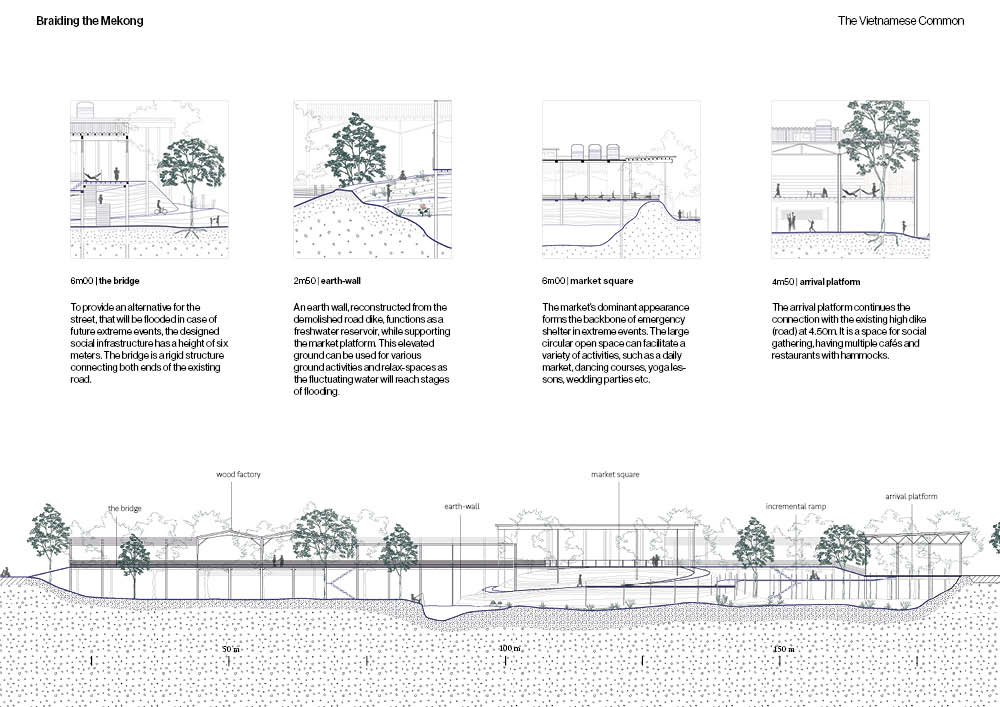
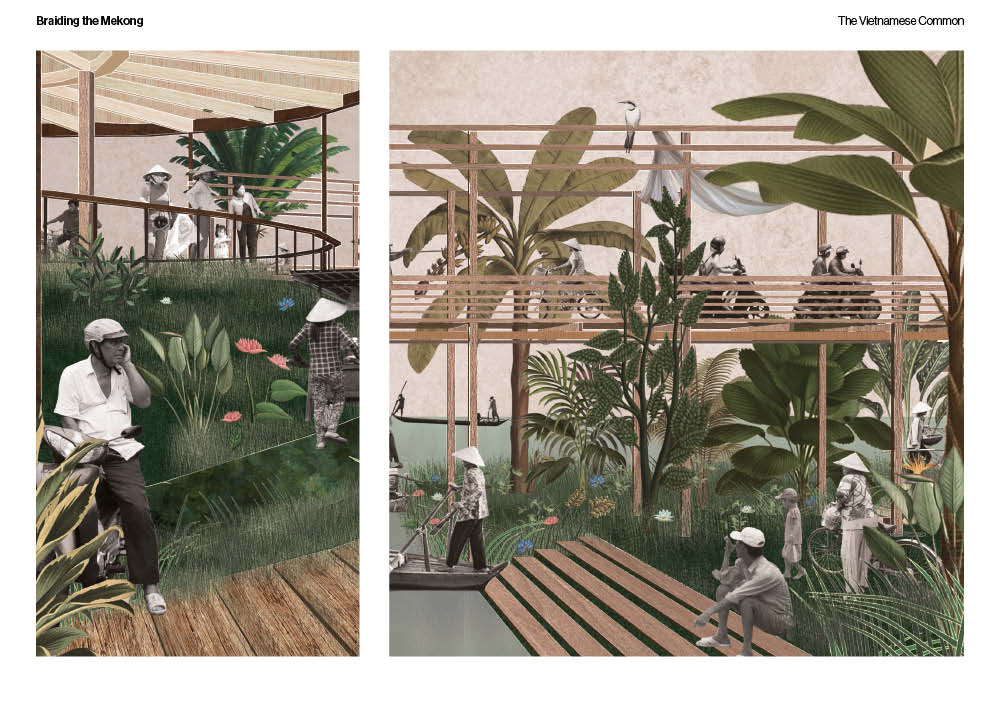
In our response the need for symbiosis between nature and mankind is foregrounded across scales. The delta’s complex hydrological system has been disrupted by the construction of high dikes and therefore needs to be re-naturalized. On the delta scale, an intervention of the braided river allows a replenishment of the lowest topographical region of the Mekong Delta, the Plain of Reeds. On strategic locations the existing infrastructure is cut to redirect flows or transformed to capture monsoon rains. These braided rivers and monsoon reservoirs collaborate as a dual system in alternating periods. Upstream, braids irrigate the delta in wet season, while reservoirs preserve large volumes of rainwater for dry season. On the scale of the urban environment of Hong Ngu, an urban core on the edge of the natural flooding plain, the concept of the braids is proceeded by a proposed cutting of a high dike. The cuts on various locations allow a peaceful flooding of the interior islands. By choreographing wetness on a micro scale the productive landscape is redesigned towards a mixed productivity. In the wet season, new water based connections will occur while the high dike circulation will be ensured by a social infrastructure that bridges the cut. To provide an alternative for the street, the social infrastructure accommodates local activities and provides emergency shelter in case of future extreme events. The bridge is accompanied by several platforms, with heights responding to the flood levels, and an incremental ramp leading to the communities. Various meeting points on intermediate levels originate along intersecting routes. Leaving space for local appropriation, the bridge plays an important part in preserving the social cohesion of the Vietnamese communities. Working on five different orders of magnitude, we believe a coherence across scales is futile. In order to survive, the urban environment needs to embrace living with floods. By designing based on Vietnamese values, we hope our work could offer inspiration in search for future resilient strategies in the delta.