-
01_Industribonne.jpg
-
09_Industribonne_.jpg
-
06_Industribonne.jpg
-
07_Industribonne.jpg
-
08_Industribonne.jpg
-
02_Industribonne.jpg
-
05_Industribonne.jpg
-
10_Industribonne.jpg
-
03_Industribonne.PNG
Industribønne
Laura Hastings. Oslo, Norway
-
Name of work in English
Industribønne
-
Name of work in original language
The Bean of Industry
Prize year
Young Talent 2025
-
Work Location
Oslo, Norway
-
Author/s
Laura Hastings
-
School
Birmingham School of Architecture - Birmingham City University.
Birmingham, United Kingdom
Young Talent 2025 YT Open Nominees
Industribønne
The Bean of Industry
Program
Food & Accommodation
-
Labels
Café · Heritage · Nature
The topic ‘Inhabiting the City/Wall’ has guided research of the design unit. Smallbrook Ringway Centre, Birmingham (1962), a building conceived by James Roberts as a barbican wall and civic gateway, provided an initial point of study, having been the subject of a national campaign for retention and reuse on heritage and environmental grounds. Through this, we investigated the tangible and explicit manifestations of the city wall in its various forms and locations, designing proposals within wall-like conditions in Oslo, questioning tradition, material culture, communality and civic identity.
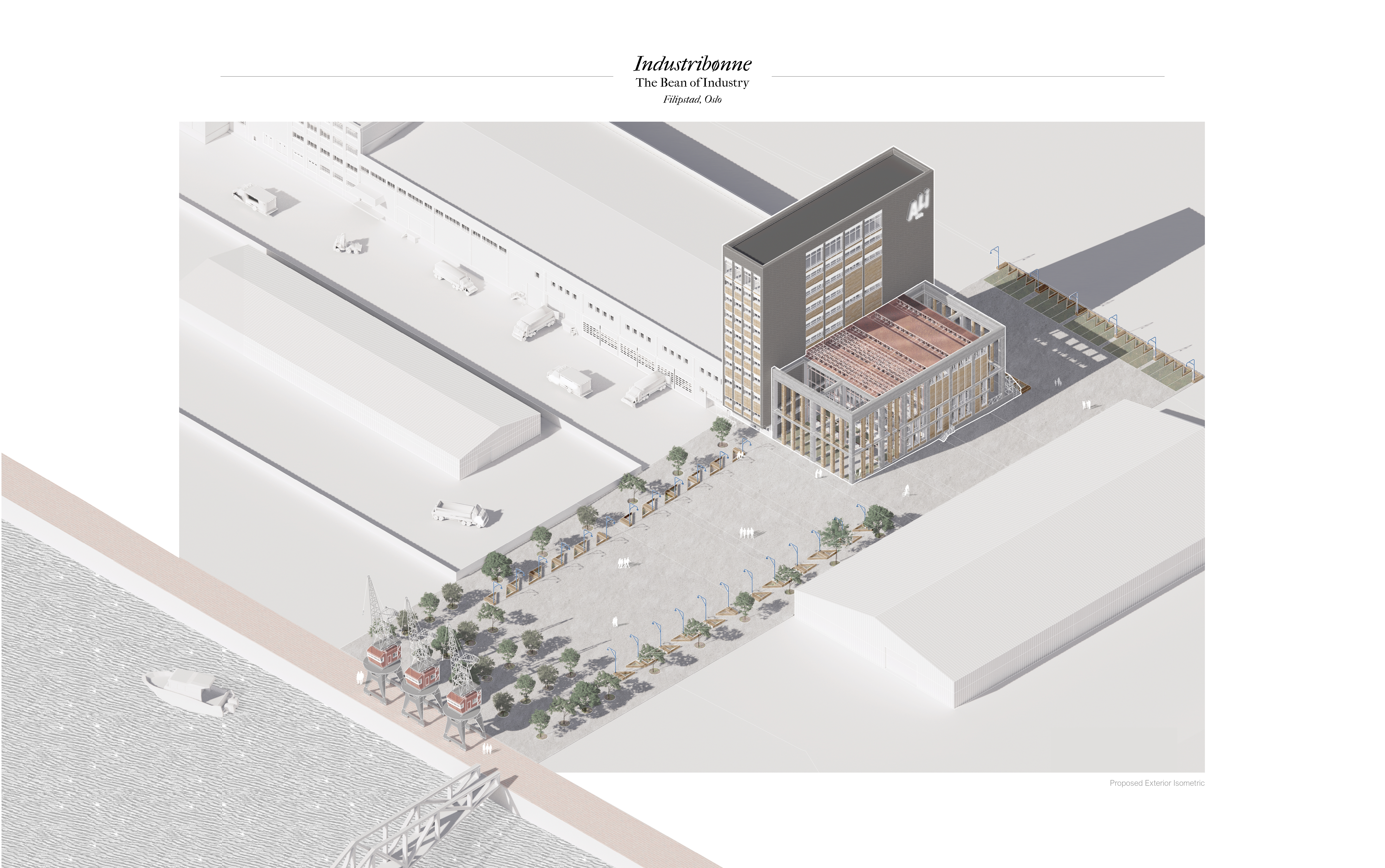
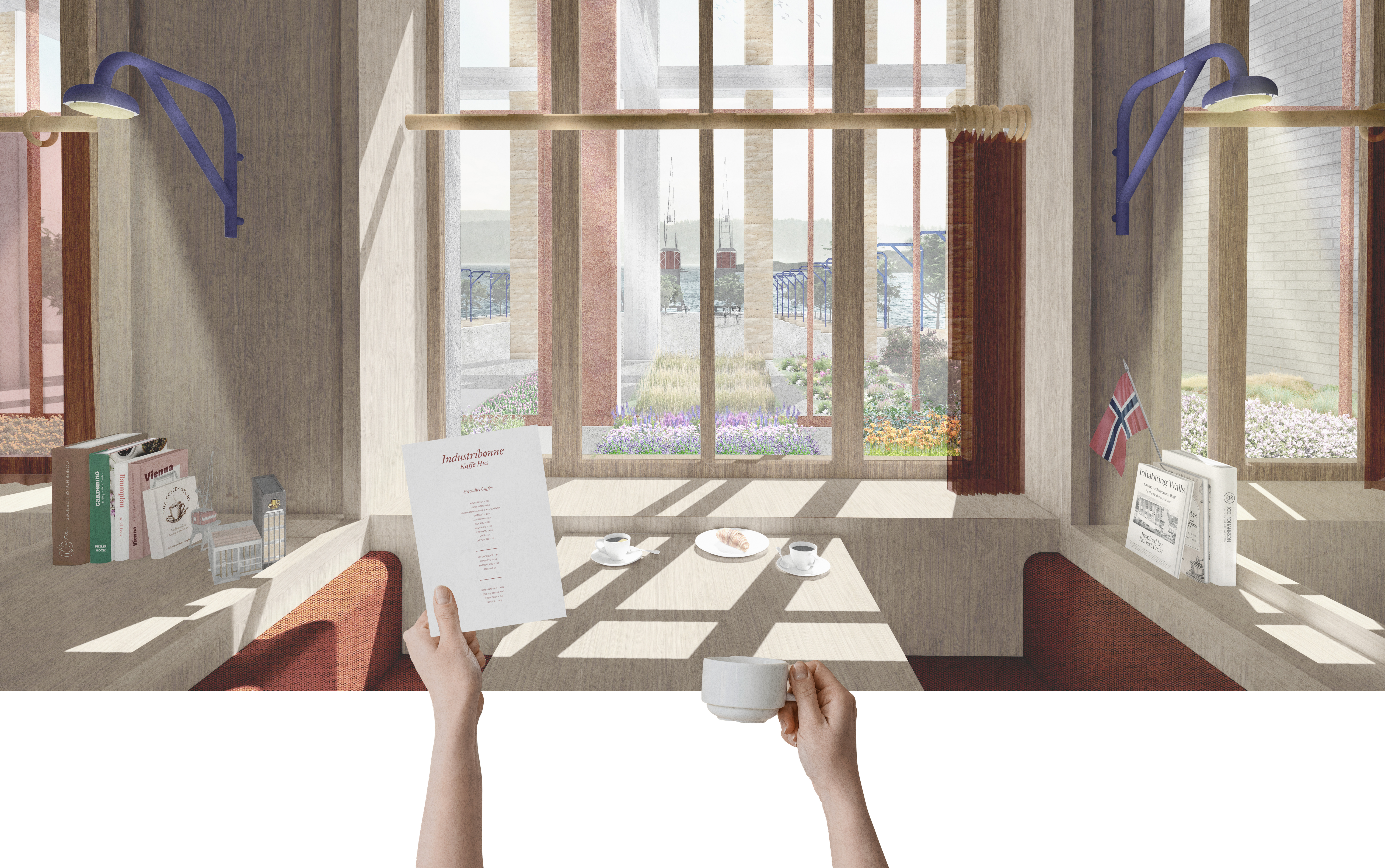
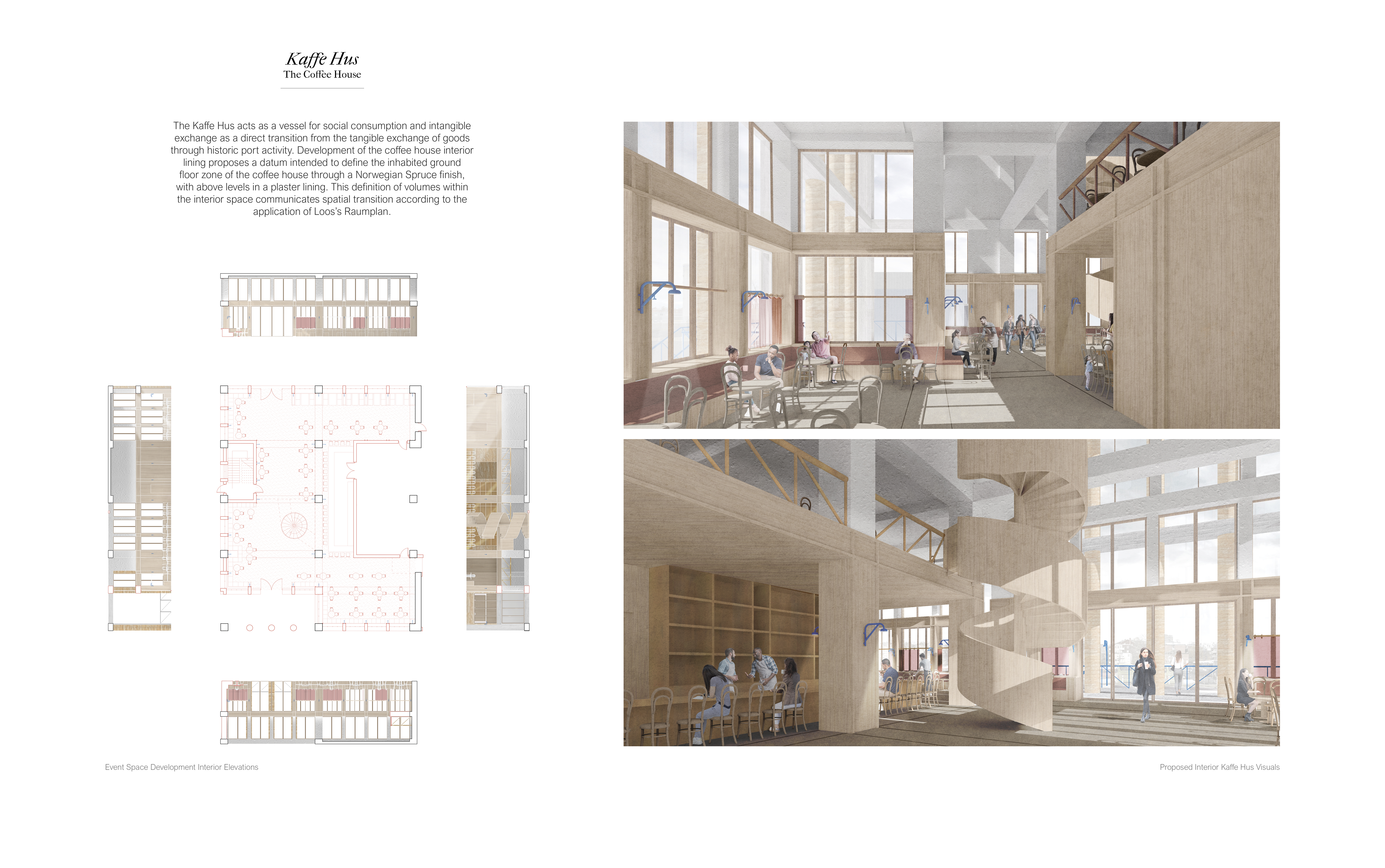
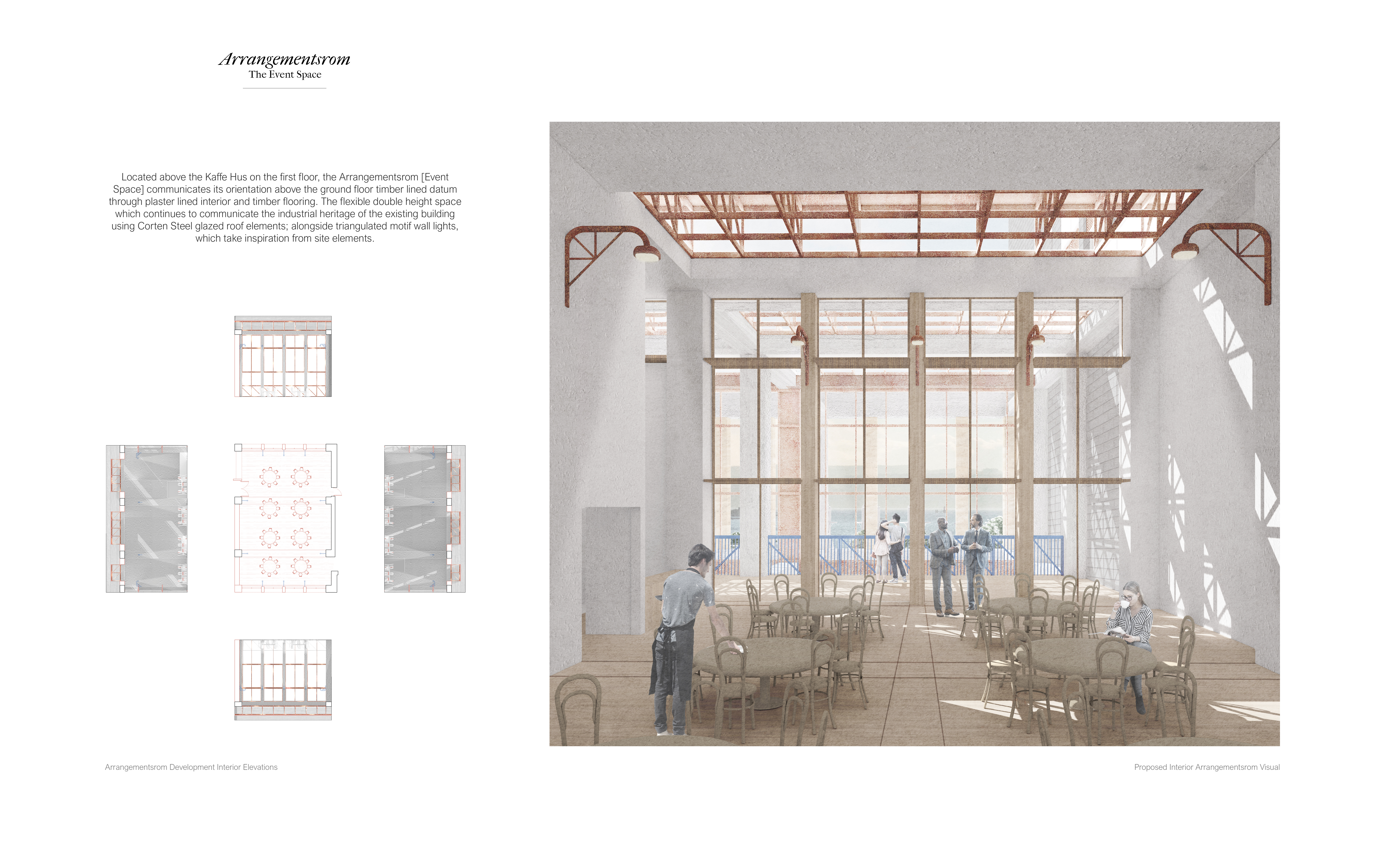
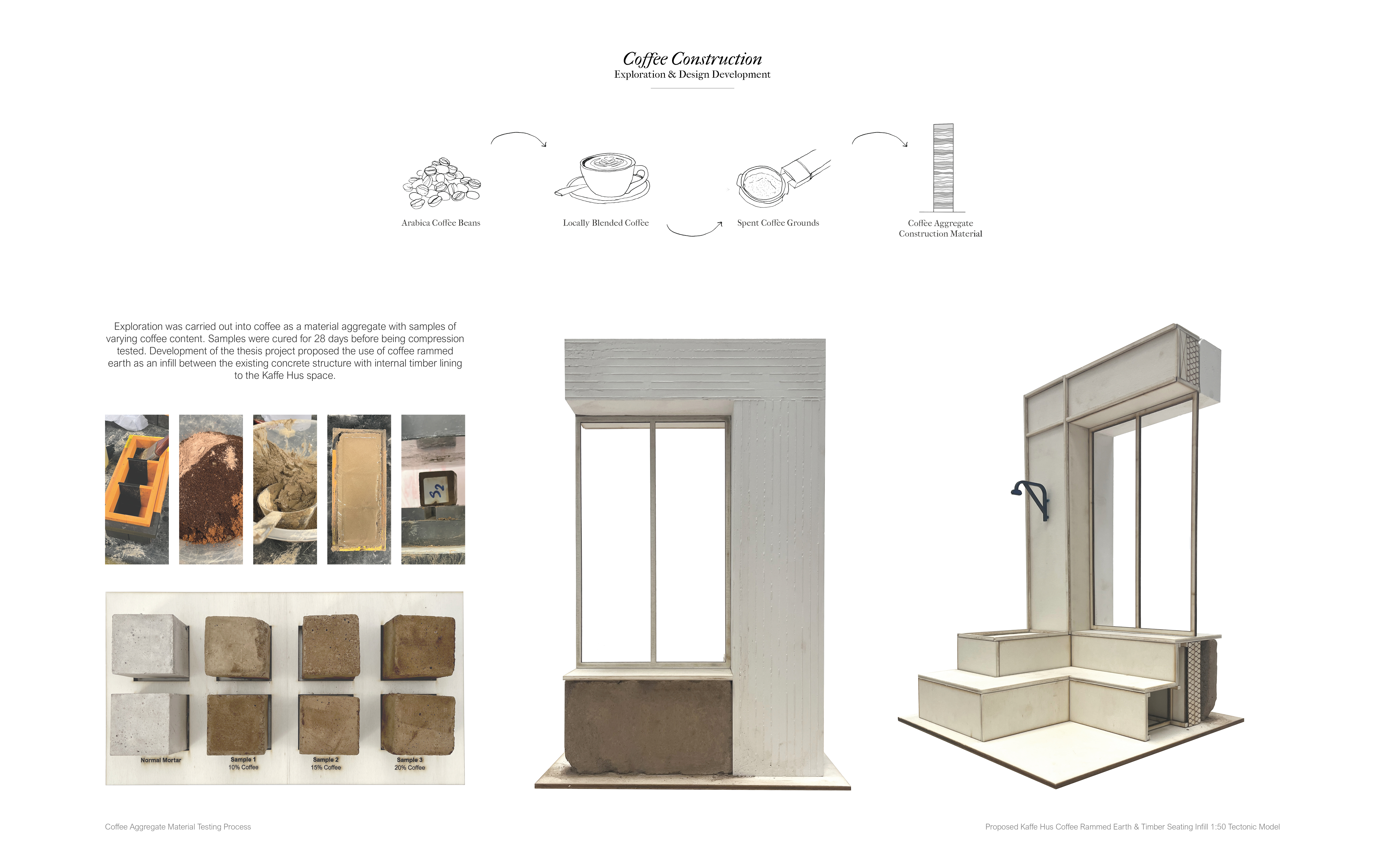
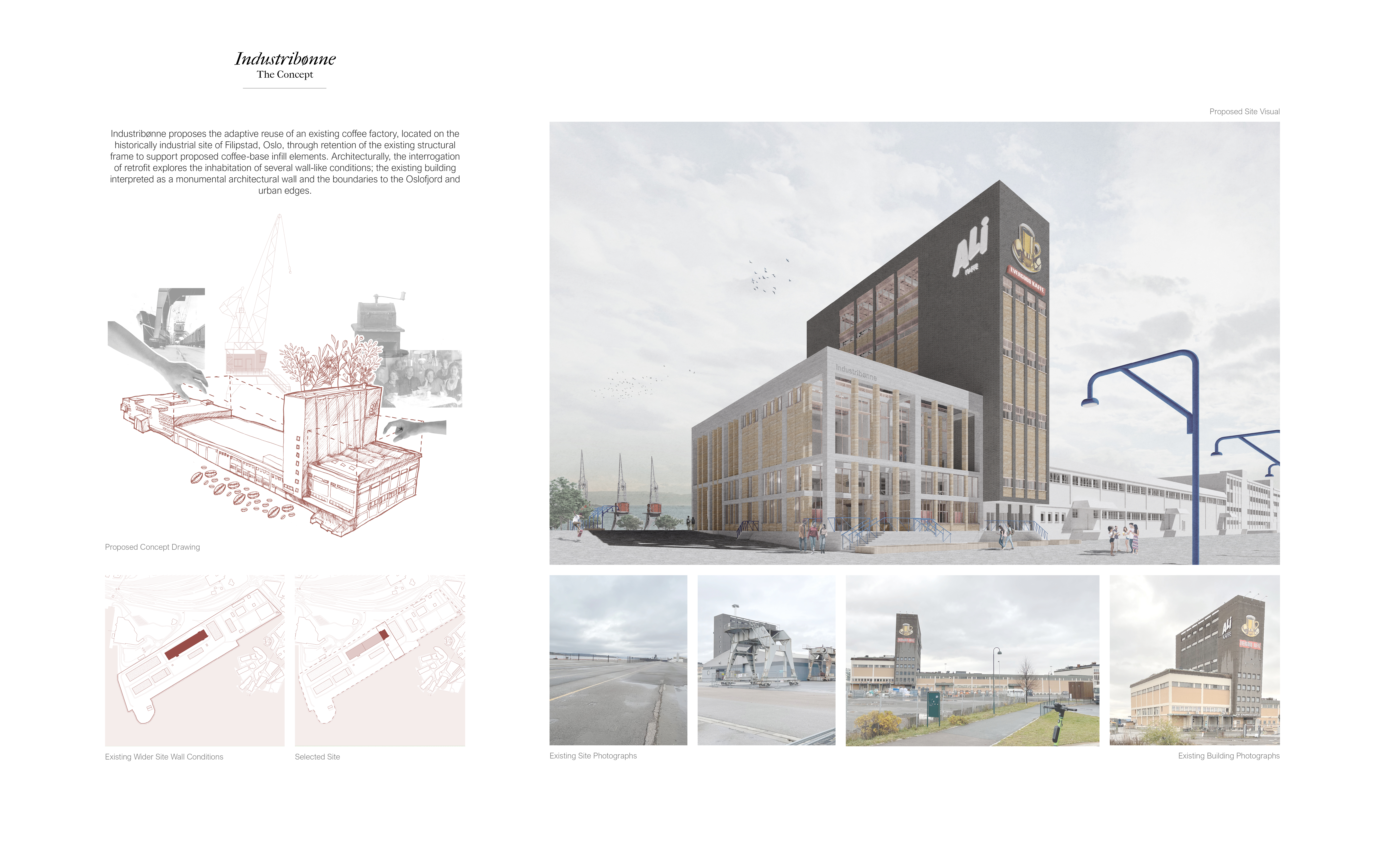
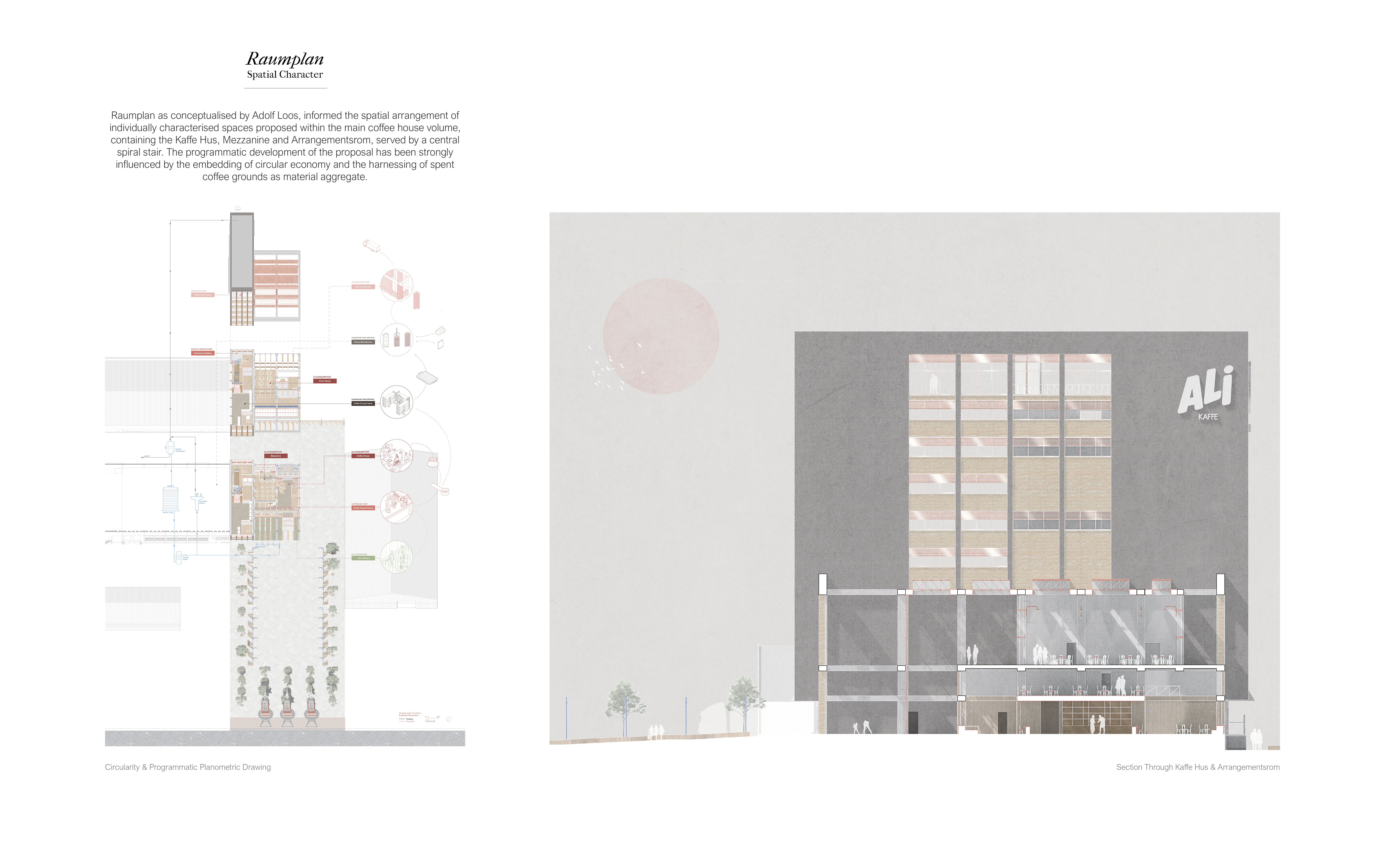
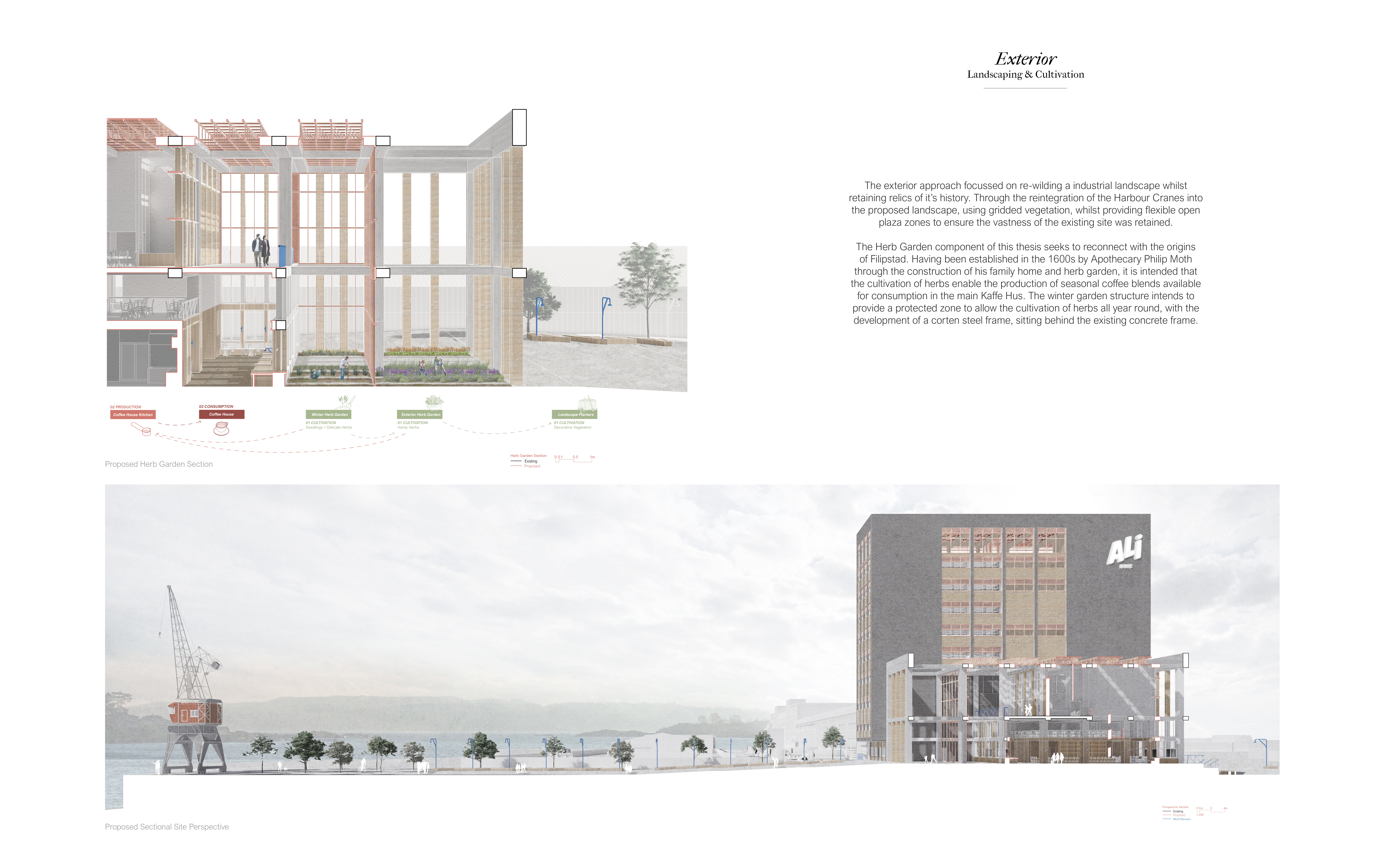
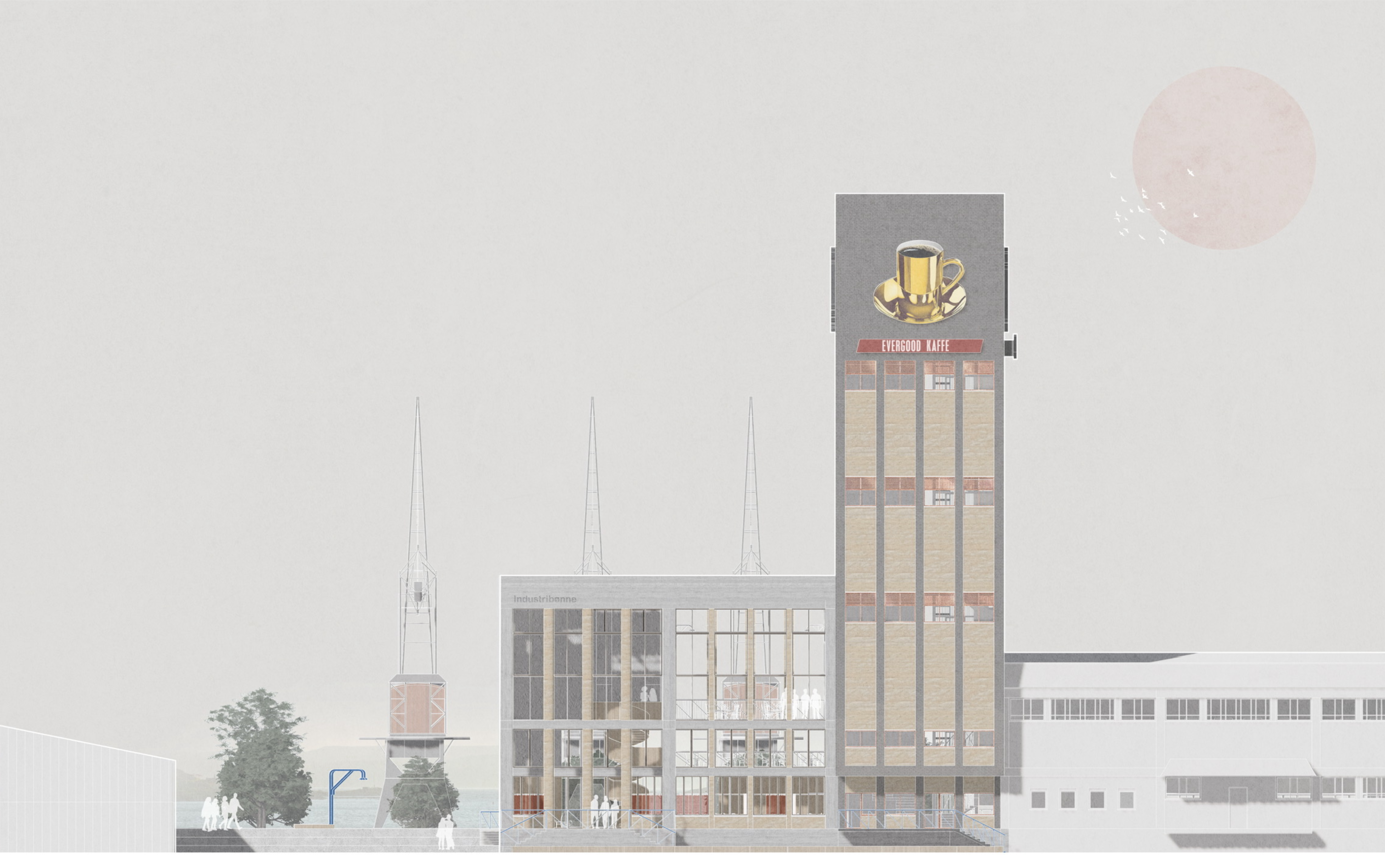
Norwegians are the second highest coffee consumer in Europe, drinking approximately 9.9kg per capita annually. Could spent coffee grounds as waste, be the answer to a more sustainable beverage and less carbon intensive construction? Industribønne proposes the adaptive reuse of an existing coffee factory, located on the historically industrial site of Filipstad, Oslo, through retention of the existing structural frame to support proposed coffee-base infill elements. Architecturally the interrogation of retrofit explores the inhabitation of several wall-like conditions; the existing building interpreted as a monumental architectural wall and the boundaries to Oslofjord and urban edges. Material exploration and circular processes are a focus of this thesis, heavilyinforming the spatial arrangement and proposed programme from cultivation to manufacture. The development of the main Kaffe Hus acts as a vessel for social consumption, intangible exchange as a direct transition from the tangible exchange of goods through historic port activity; the Herb Garden intends to reconnect with the site’s original function as the home of an apothecary, enabling locally grown produce to be prepared and consumed; and the proposed redevelopment of the existing landmark tower to dry spent coffee grounds before manufacture, all honour the historical functions of the existing coffee factory.