-
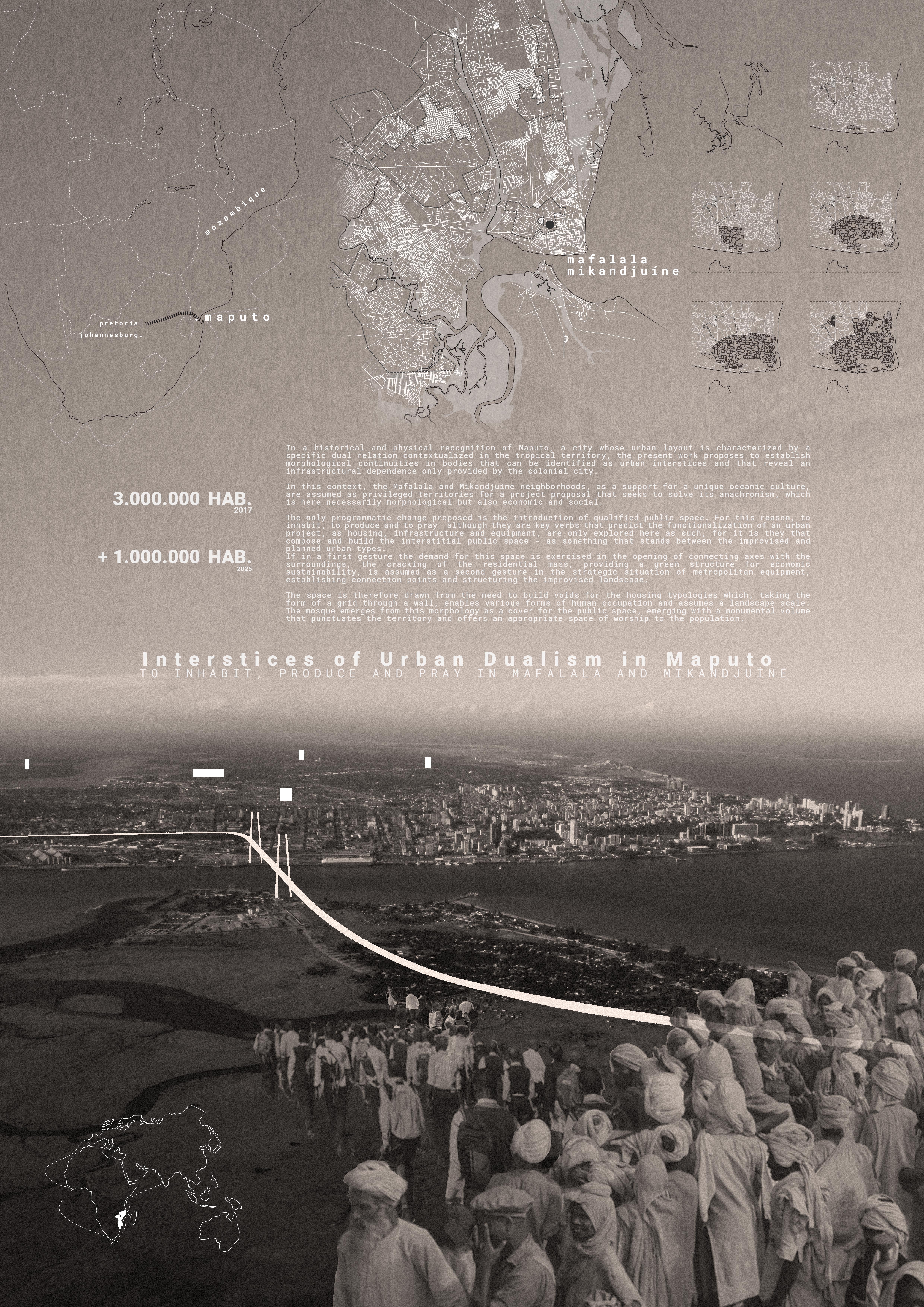
Interstices of Urban Dualism in Maputo
-
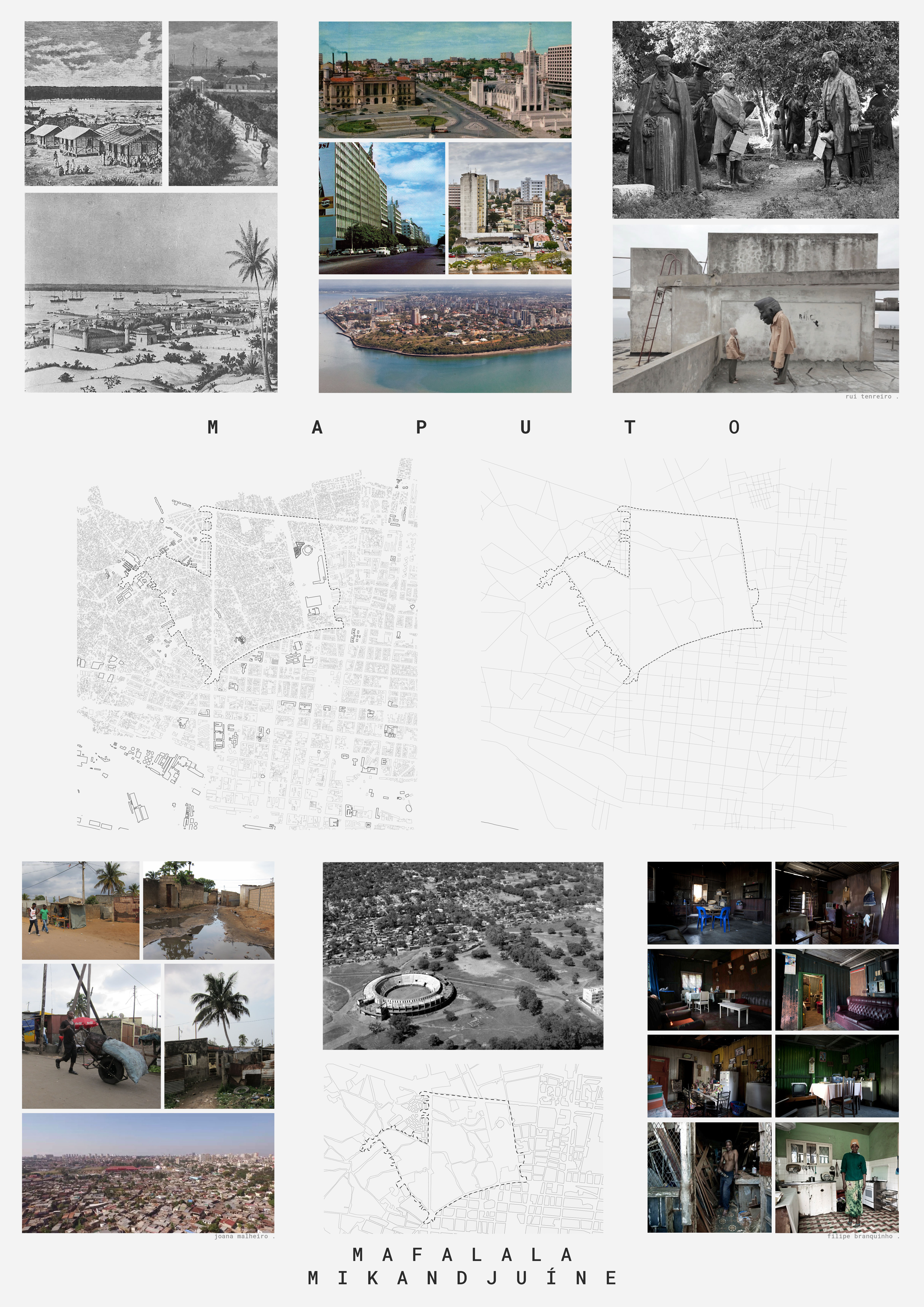
Recognition of Mafalala and Mikandjuíne
-
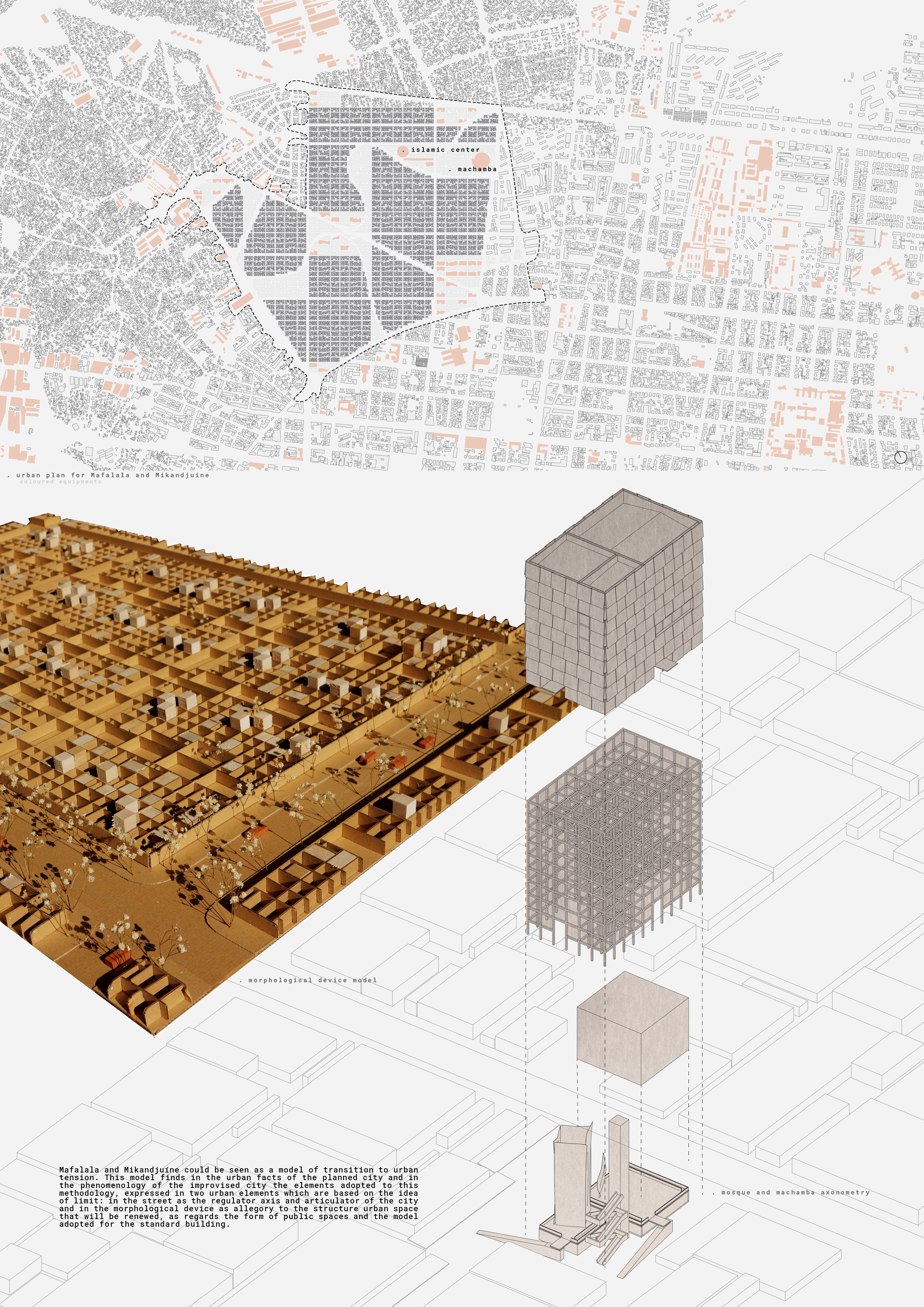
To Inhabit, Produce and Pray
-
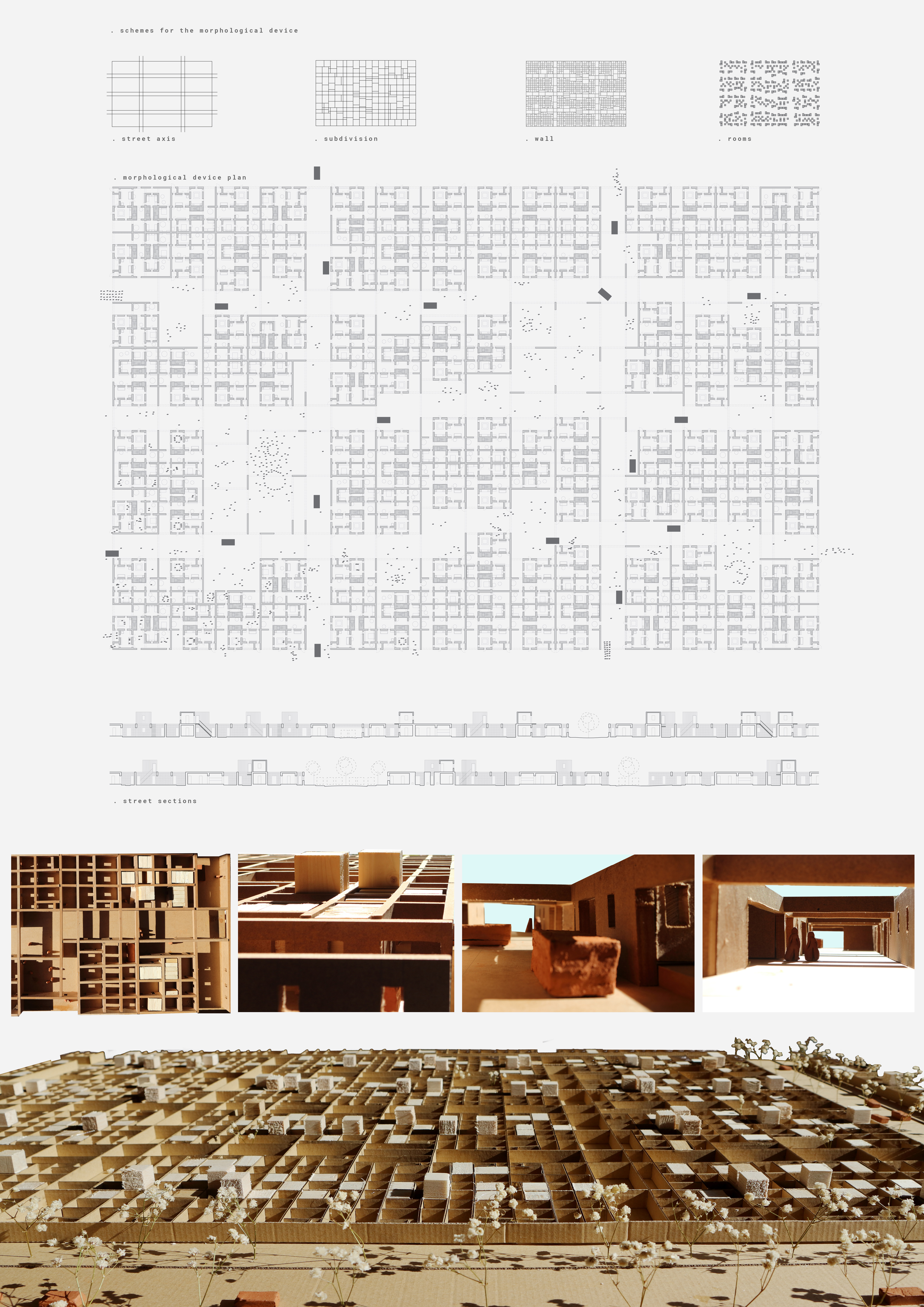
Building the Morphological Device
-
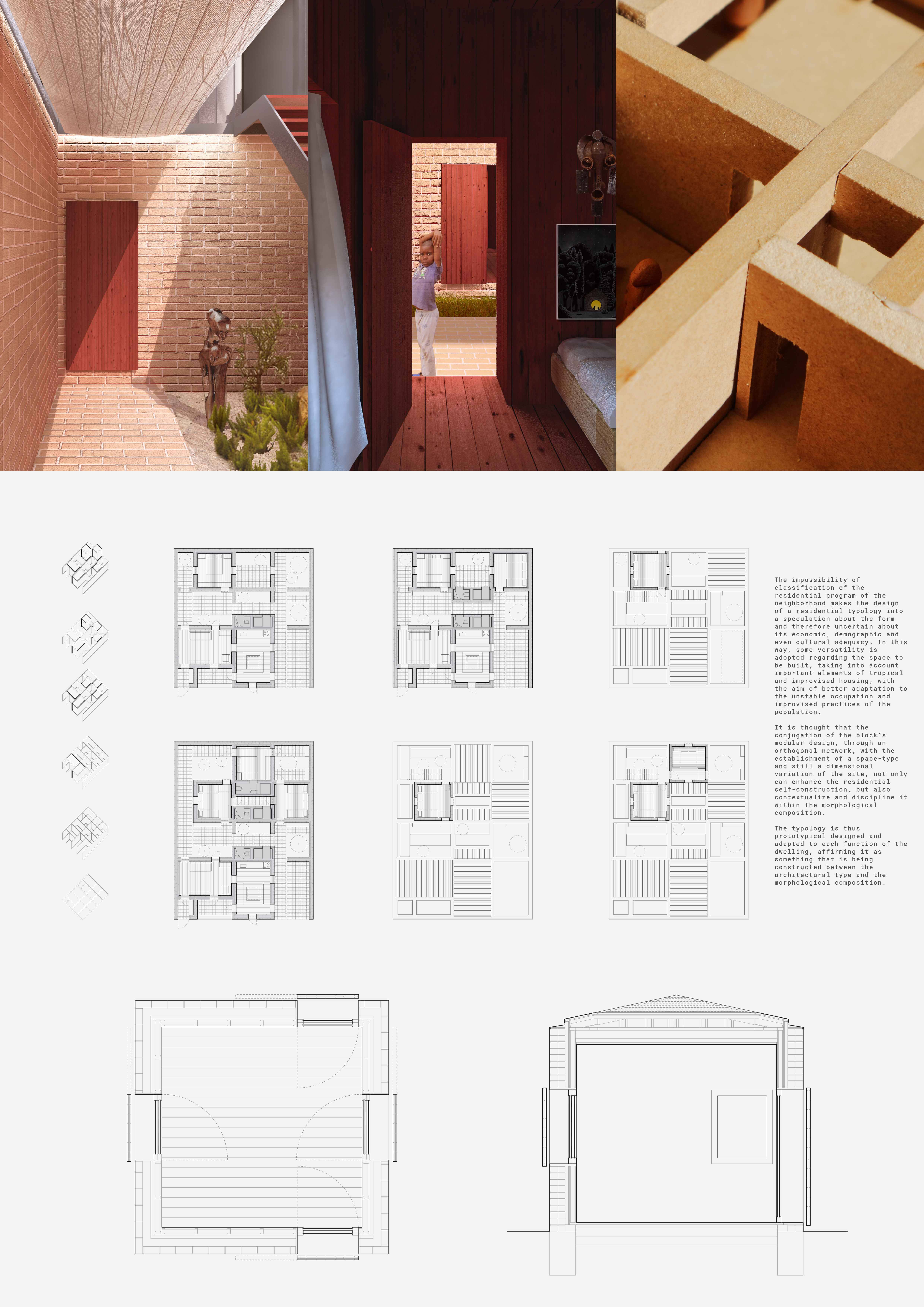
Occupying the Wall
-
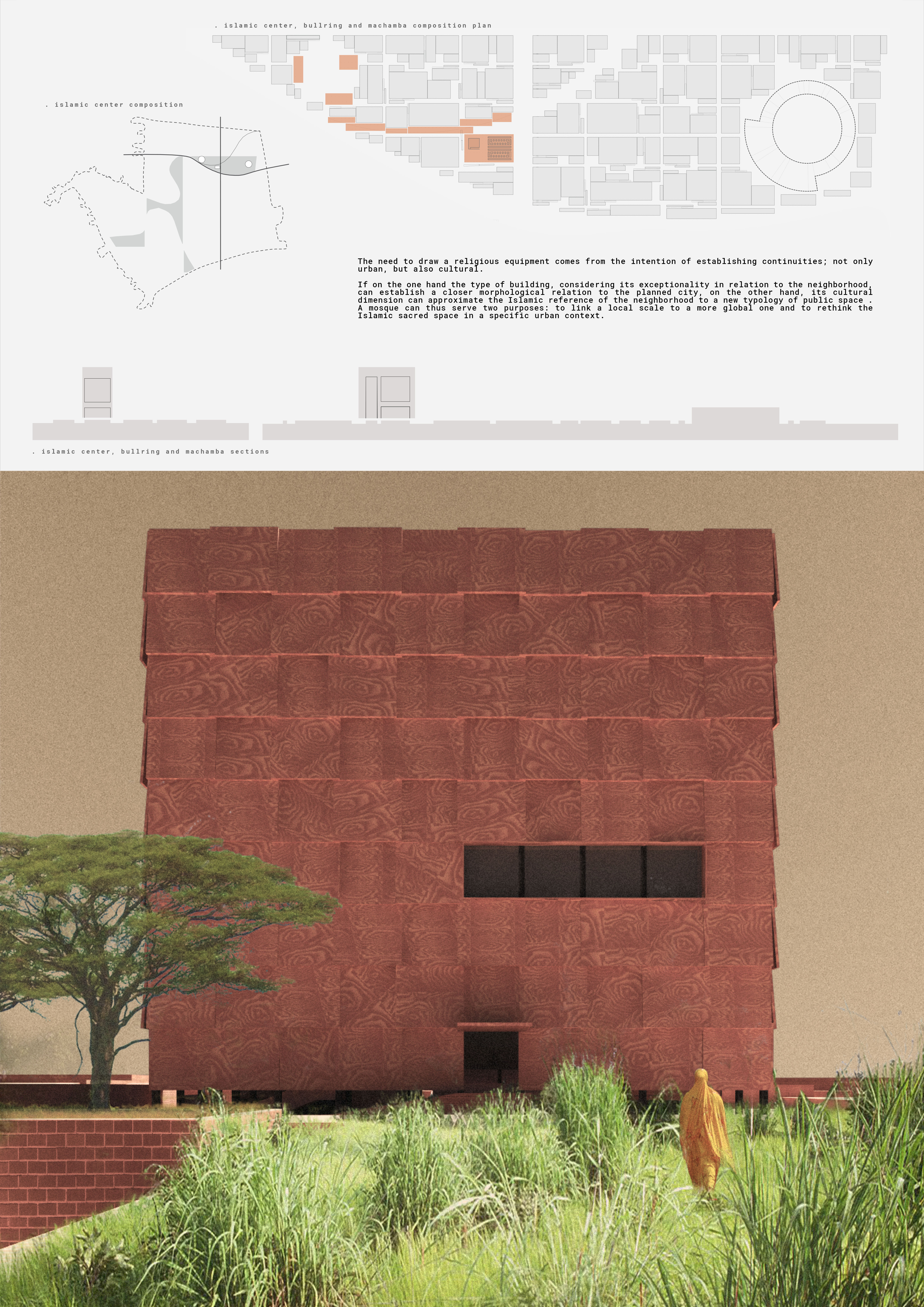
Punctuating the Landscape
-
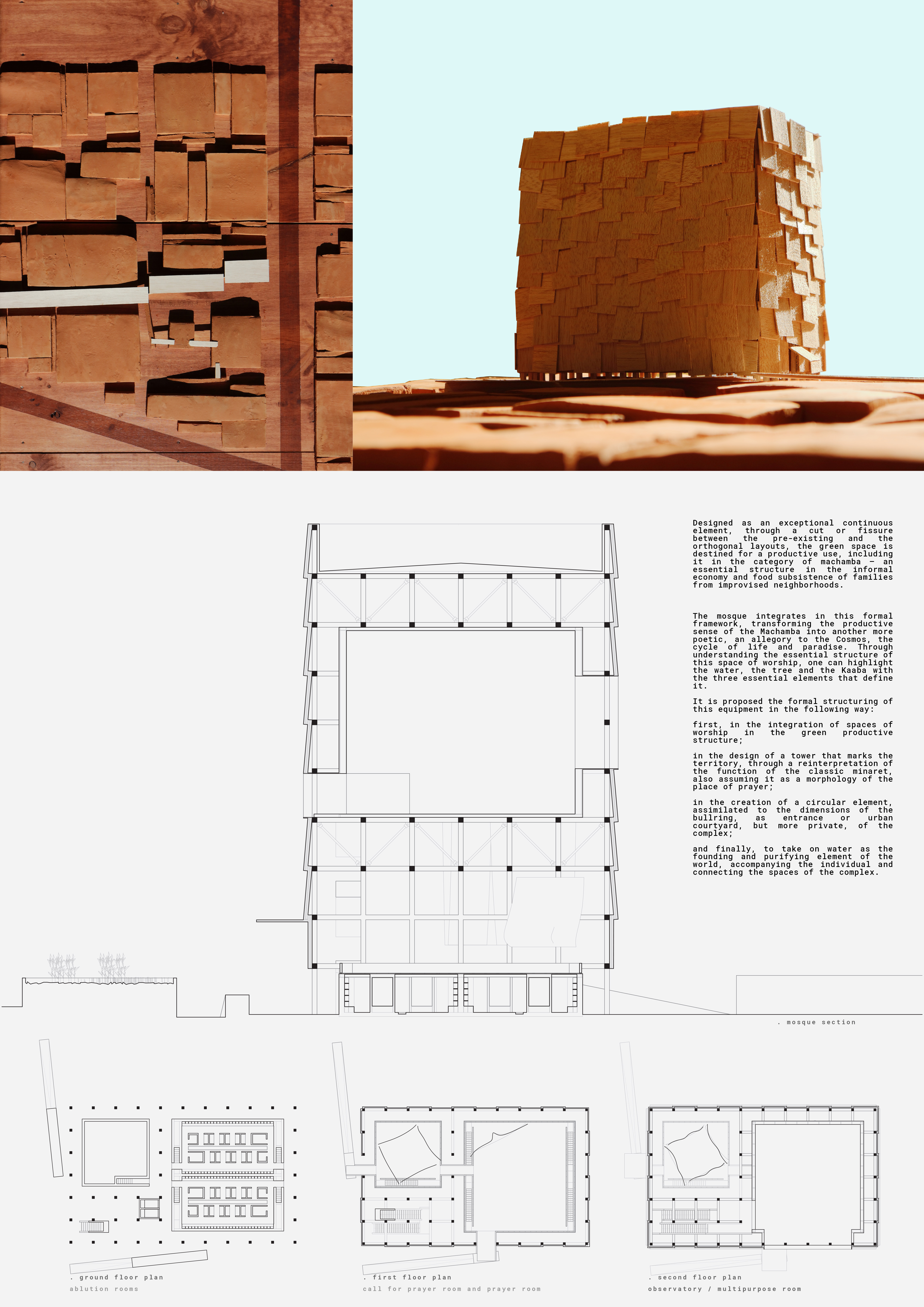
The Mosque
-
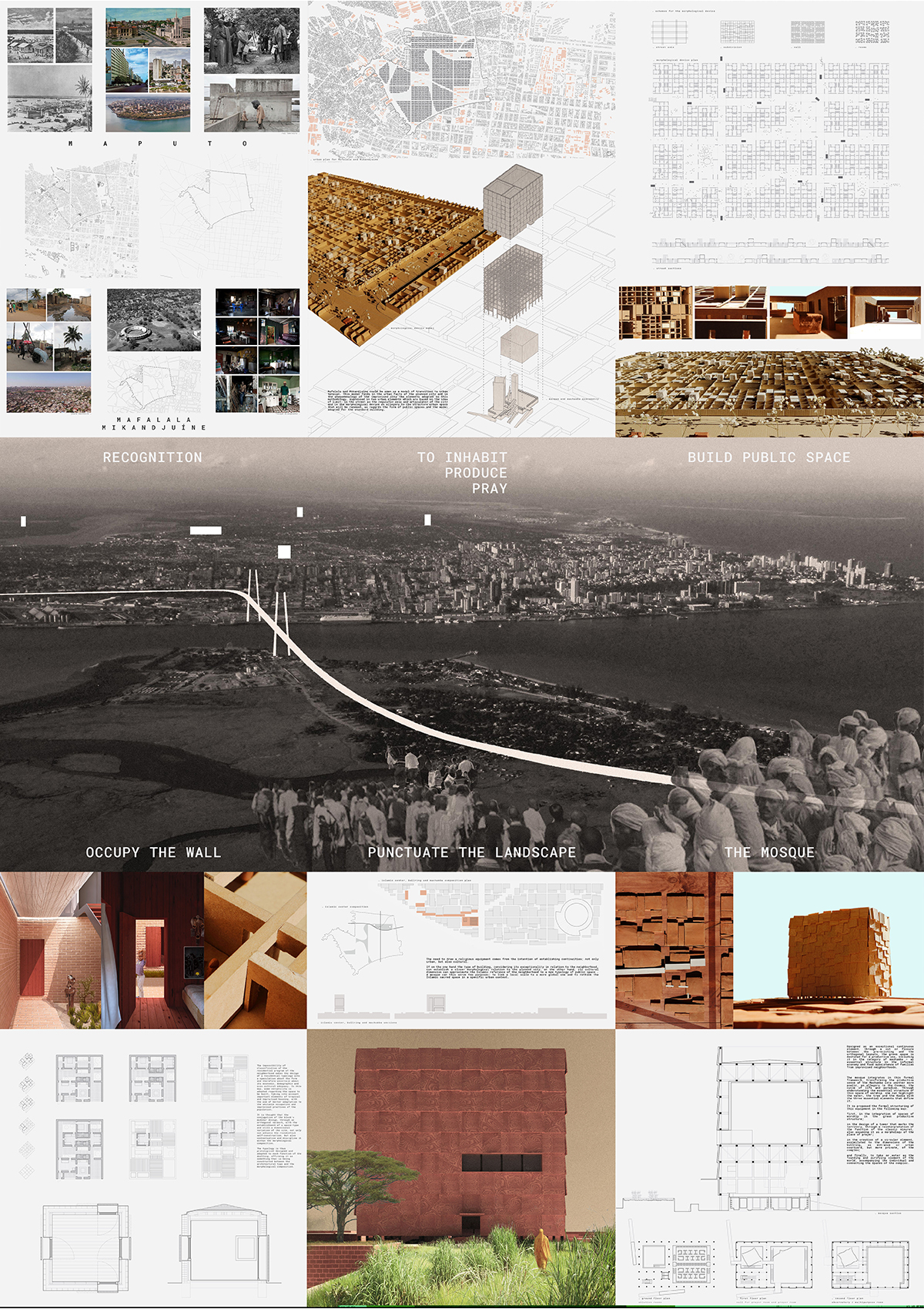
Sinthesis
-
-
Interstices of Urban Dualism in Maputo
João Pedro de Brito Oliveira. Maputo, Mozambique
-
Name of work in English
Interstices of Urban Dualism in Maputo
-
Name of work in original language
To Inhabit, Produce and Pray in Mafalala and Mikandjuíne
Prize year
Young Talent 2018
-
Work Location
Maputo, Mozambique
-
Author/s
João Pedro de Brito Oliveira
-
School
Lisbon School of Architecture - University of Lisbon.
Lisboa, Portugal
Young Talent 2018 YT Shortlisted
Interstices of Urban Dualism in Maputo
To Inhabit, Produce and Pray in Mafalala and Mikandjuíne
Program
Urban planning
-
Labels
Redevelopment · Public Space
After 40 years of the independence of the Republic of Mozambique, its capital city has still managed to remain built from two kinds of cities as the product of the colonial apartheid. This work aims to physically react with history and politics, trying to blur this difference within its most genuine neighborhoods.
The drawing becomes productive when, in a holistic and integrated reading, reveals the structure of the territory and recognizes its being: its truths and its inconsistencies are evidenced, and the reconciliation of its relation with the [urban] landscape is projected. Therefore, in a historical and physical recognition of Maputo, a city whose urban layout is characterized by a specific dual relation contextualized in the tropical territory, the present work proposes to establish morphological continuities in bodies that can be identified as urban interstices and that reveal an infrastructural dependence only provided by the colonial city.\nIn this context, the Mafalala and Mikandjuíne neighborhoods, as a support for a unique oceanic culture, are assumed as privileged territories for a project proposal that seeks to solve its anachronism, which is here necessarily morphological, but also economic and social.\nThe only programmatic change proposed is the introduction of qualified public space. For this reason, to inhabit, to produce and to pray, although they are key verbs that predict the functionalization of an urban project, as housing, infrastructure and equipment, are only explored here as such, for it is they that compose and build the interstitial public space - as something that stands between the improvised and planned urban types.\nIf in a first gesture the demand for this space is exercised in the opening of connecting axes with the surroundings, the cracking of the residential mass, providing a green structure for economic sustainability, is assumed as a second gesture in the strategic situation of equipments, establishing connection points at a metropolitan scale and structuring the improvised landscape.