-
Pavouckova_1_cover_image.jpg
-
Pavouckova_2.jpg
-
Pavouckova_3.jpg
-
Pavouckova_4.jpg
-
Pavouckova_5.jpg
-
Pavouckova_6.jpg
-
Pavouckova_7.jpg
-
Pavouckova_8.jpg
-
Pavouckova_9.jpg
-
Pavouckova_10.jpg
-
Pavouckova_11.jpg
Landscape Regeneration of The Lusatian Neisse Upper Catchment Area
Ruby Pavoučková. Liberec, Czechia
-
Name of work in English
Landscape Regeneration of The Lusatian Neisse Upper Catchment Area
-
Name of work in original language
Koncepce krajinářského řešení revitalizace úseku horního povodí Lužické Nisy
Prize year
Young Talent 2025
-
Work Location
Liberec, Czechia
-
Author/s
Ruby Pavoučková
-
School
Faculty of Architecture - Czech Technical University.
Prague, Czechia
Young Talent 2025 YT Nominees
Landscape Regeneration of The Lusatian Neisse Upper Catchment Area
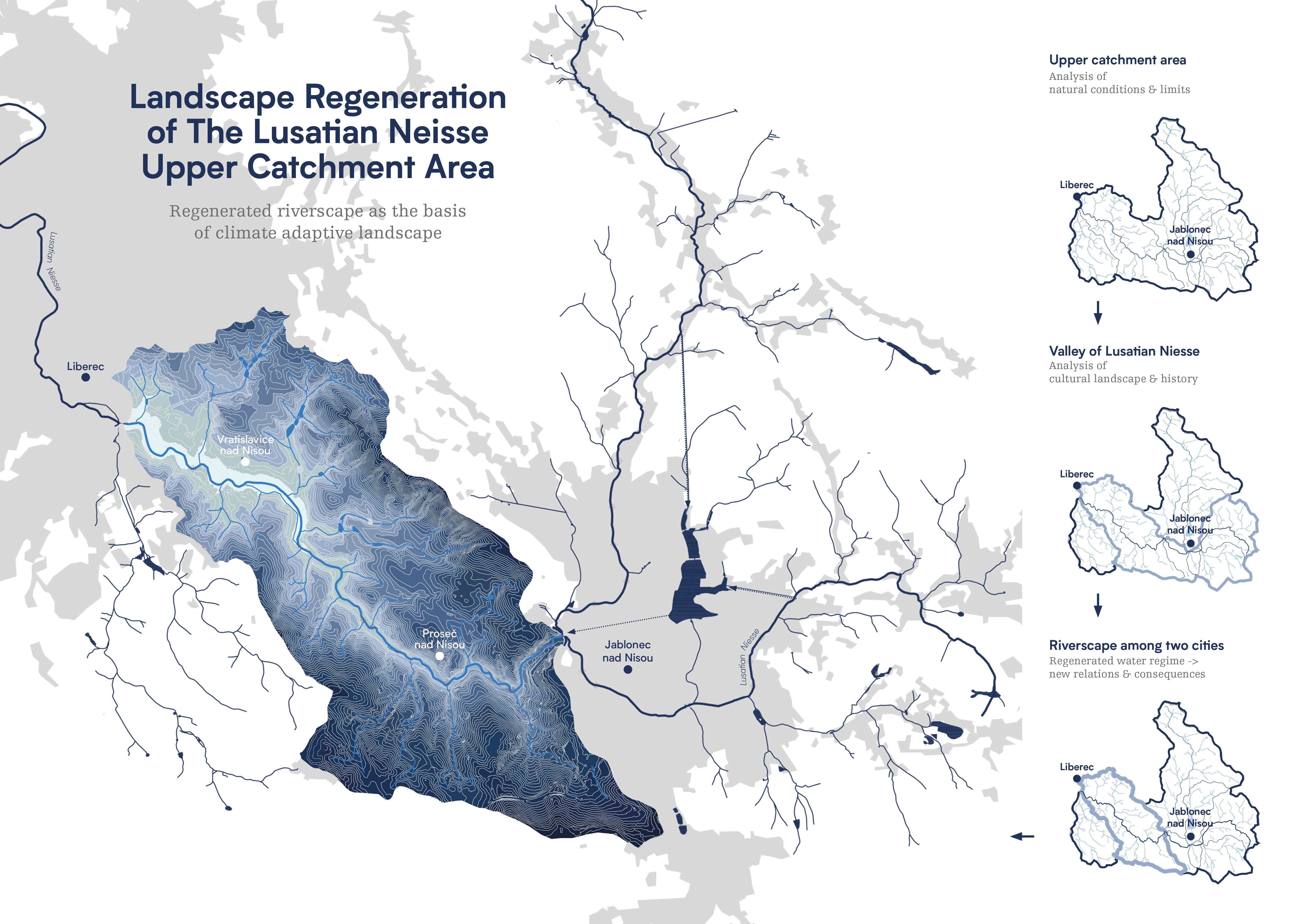
Regenerated riverscape as the basis of climate adaptive landscape
Program
Landscape
-
Labels
Regeneration · Structure
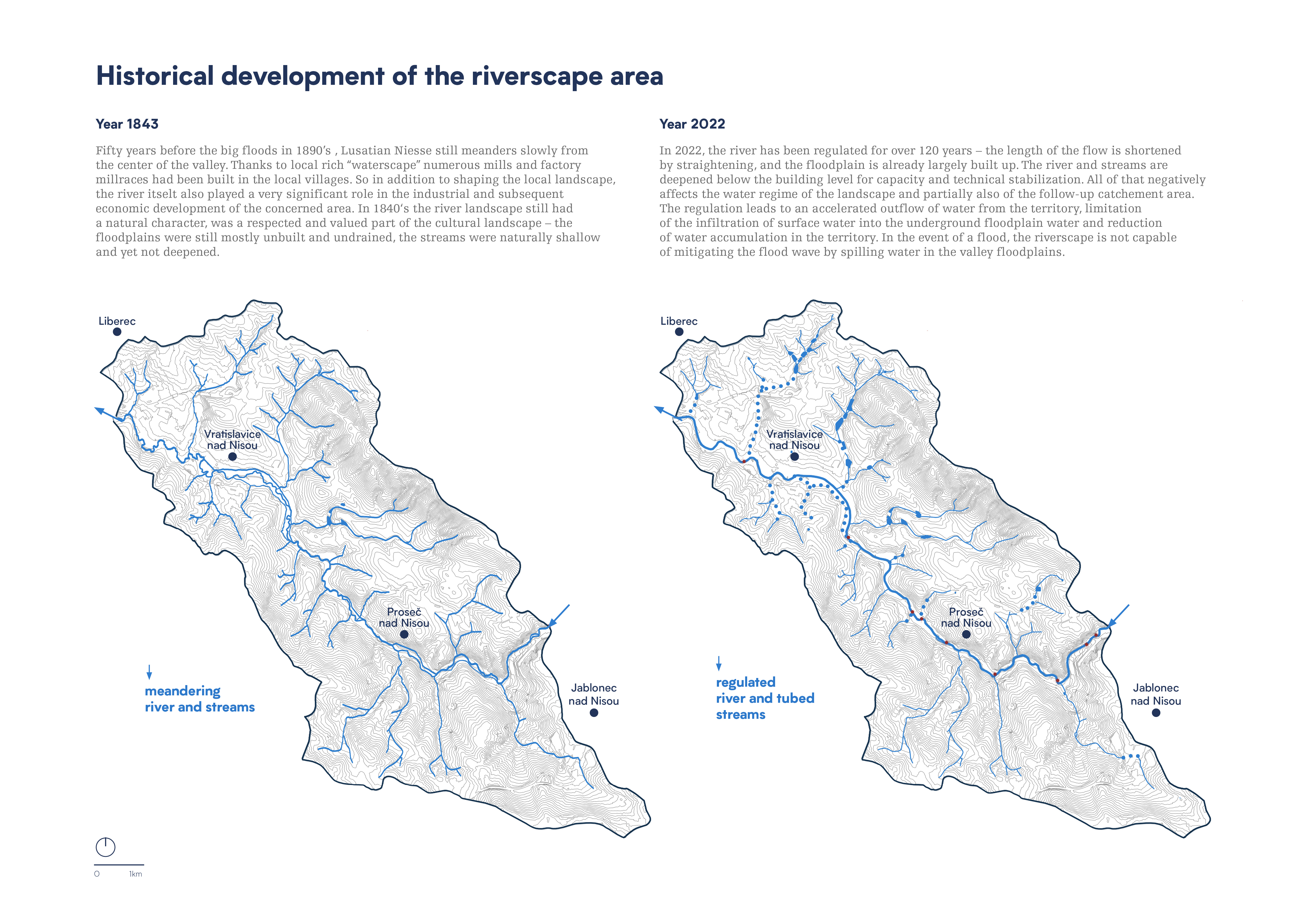
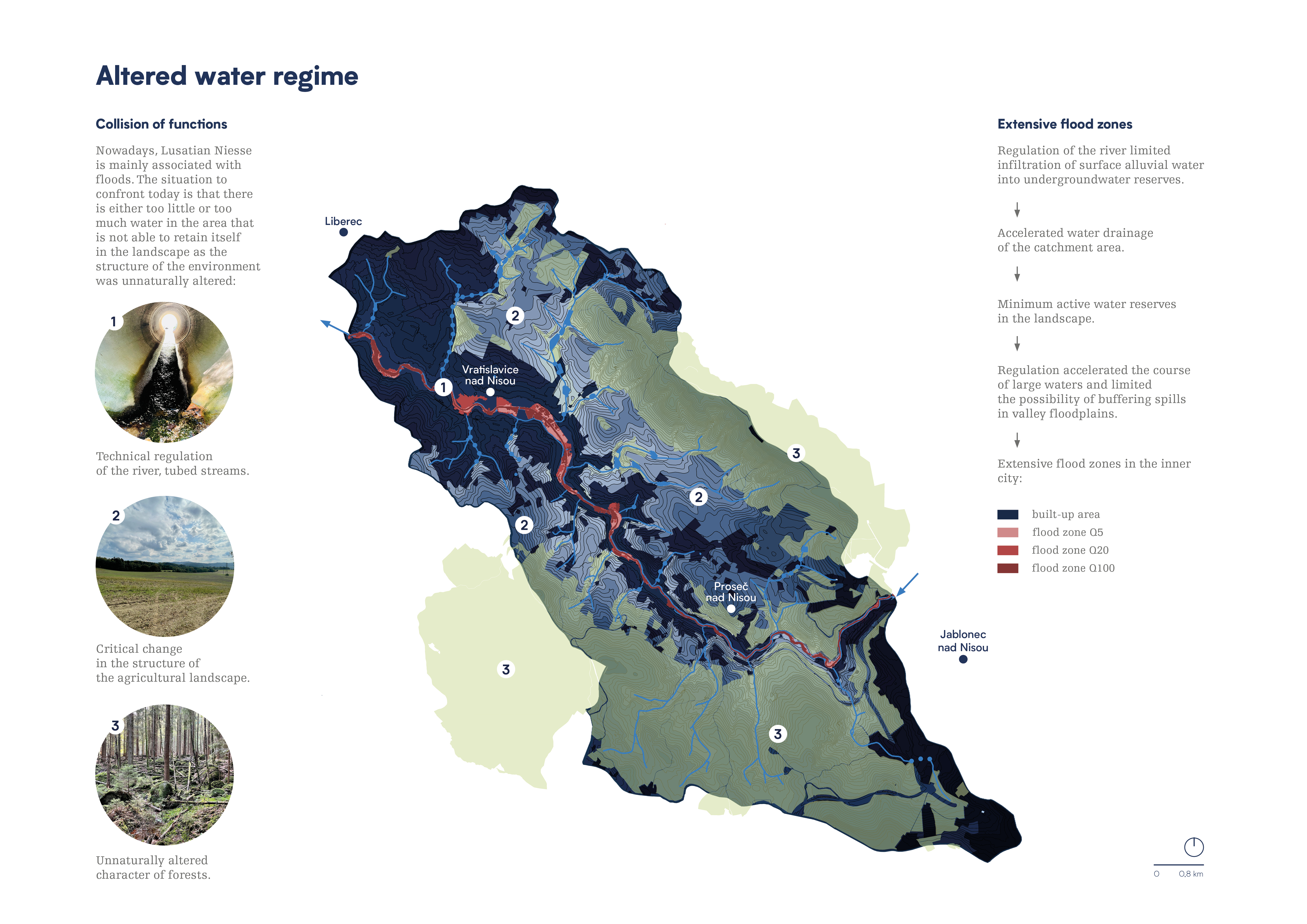
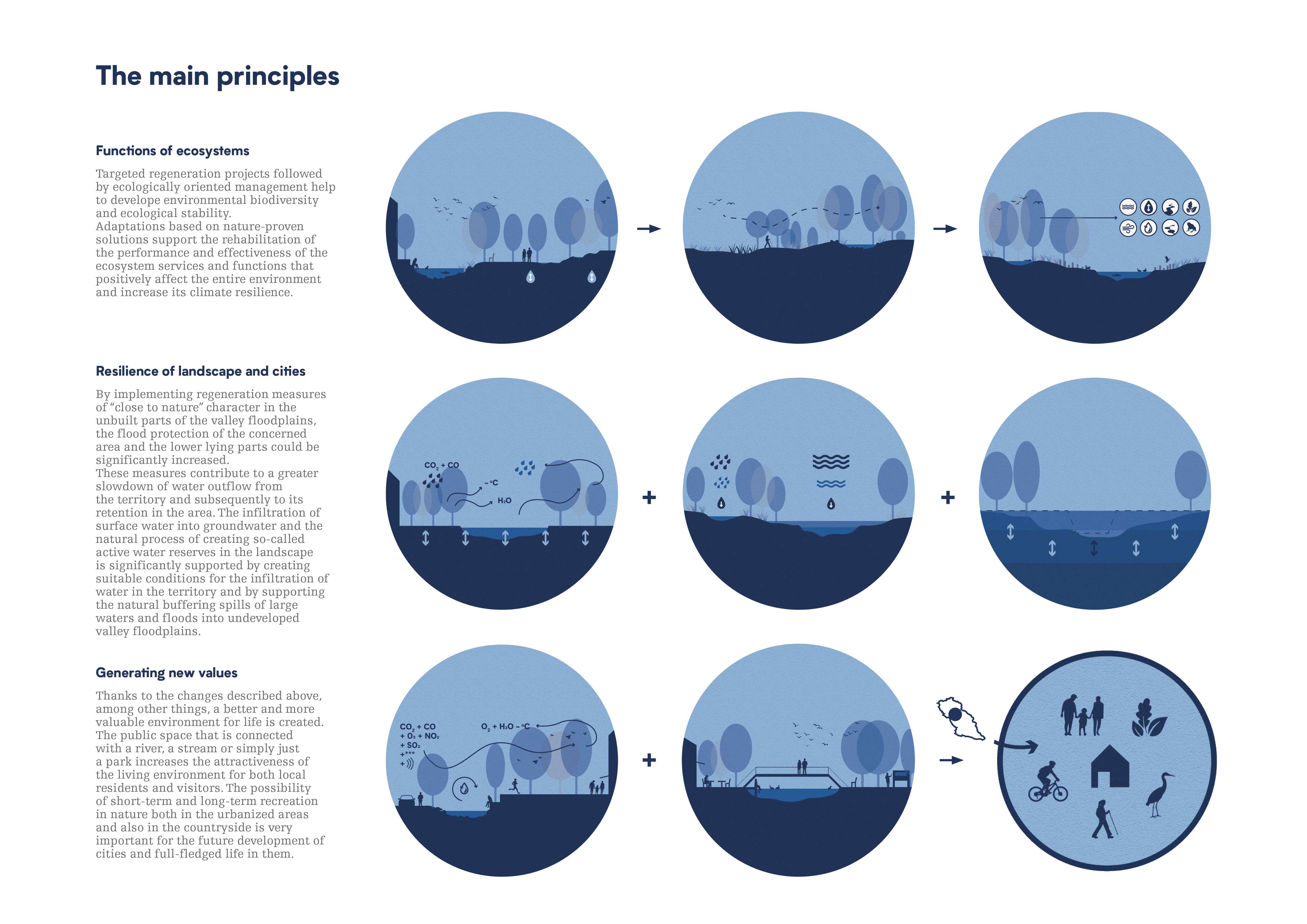
Nowadays, Lussatian Niesse is mainly associated with floods. However, it used to play significant role in the industrial and subsequent economic development in the region. The problems began over a century ago with the first catastrophic floods that followed years of massive deforestation which negatively affected the retention of water. As a result, the river bed was radically regulated. The situation to confront today is there is either too little or too much water in the area that is not able to retain itself in the landscape as the structure of the environment was unnaturally altered.
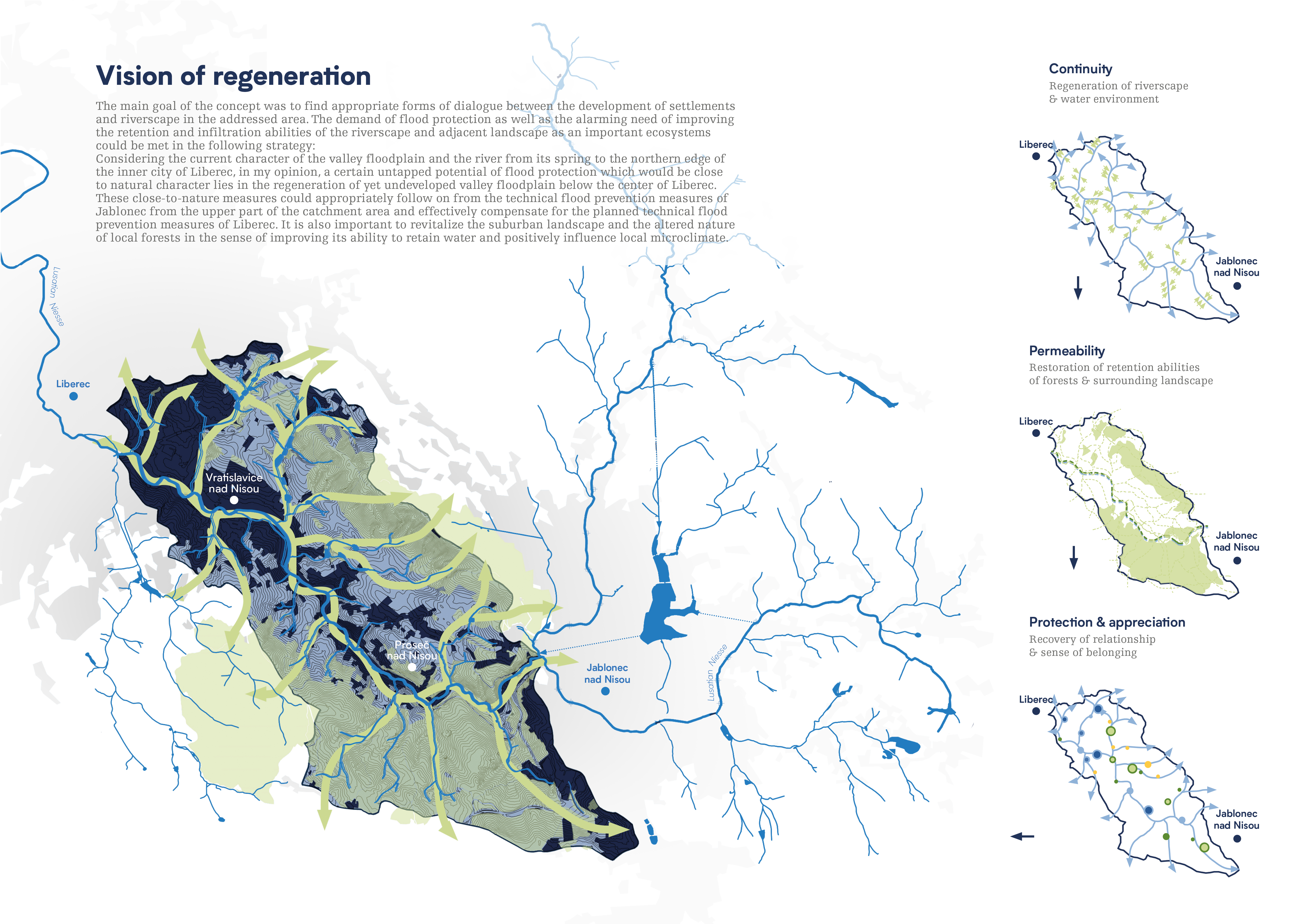
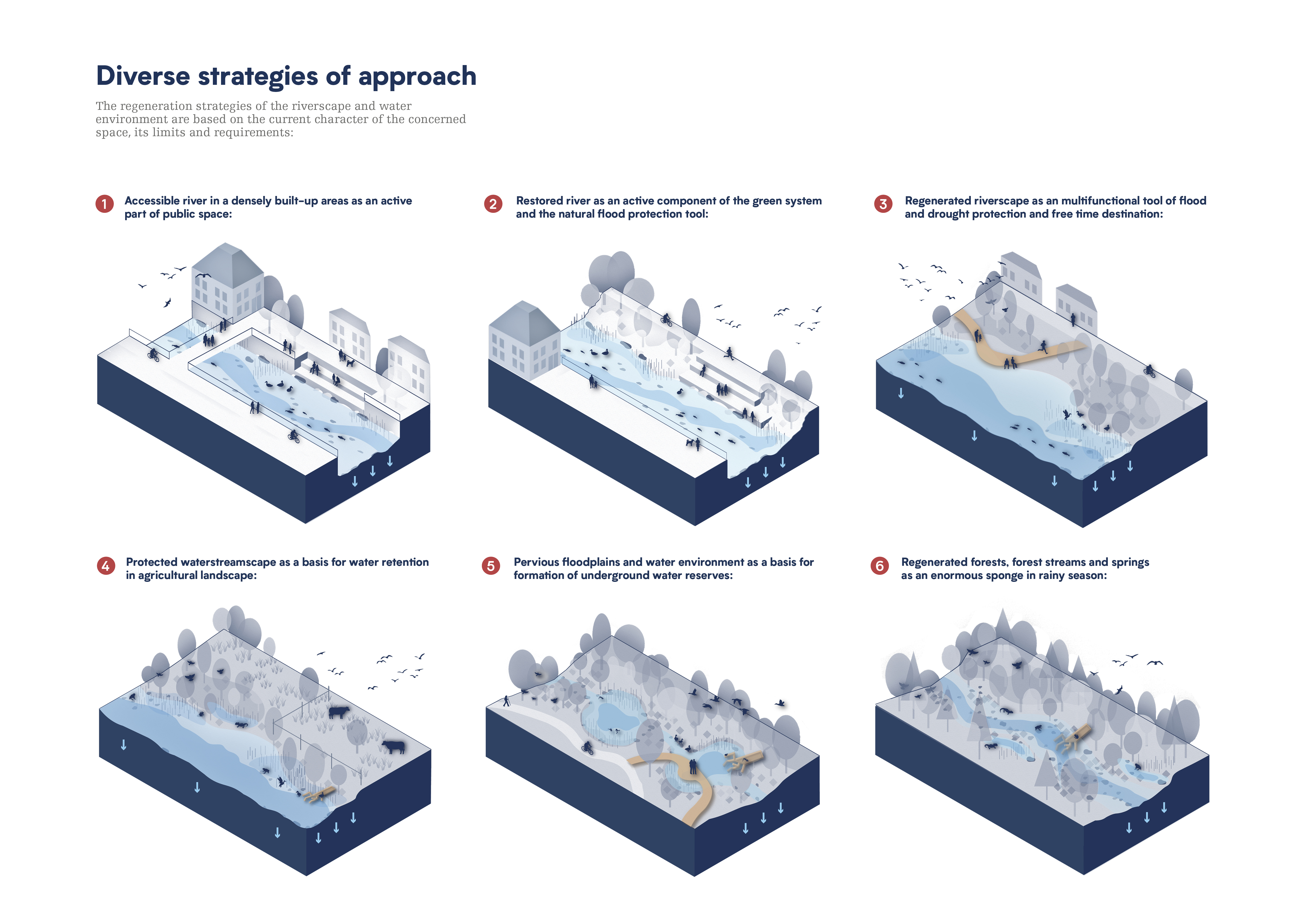
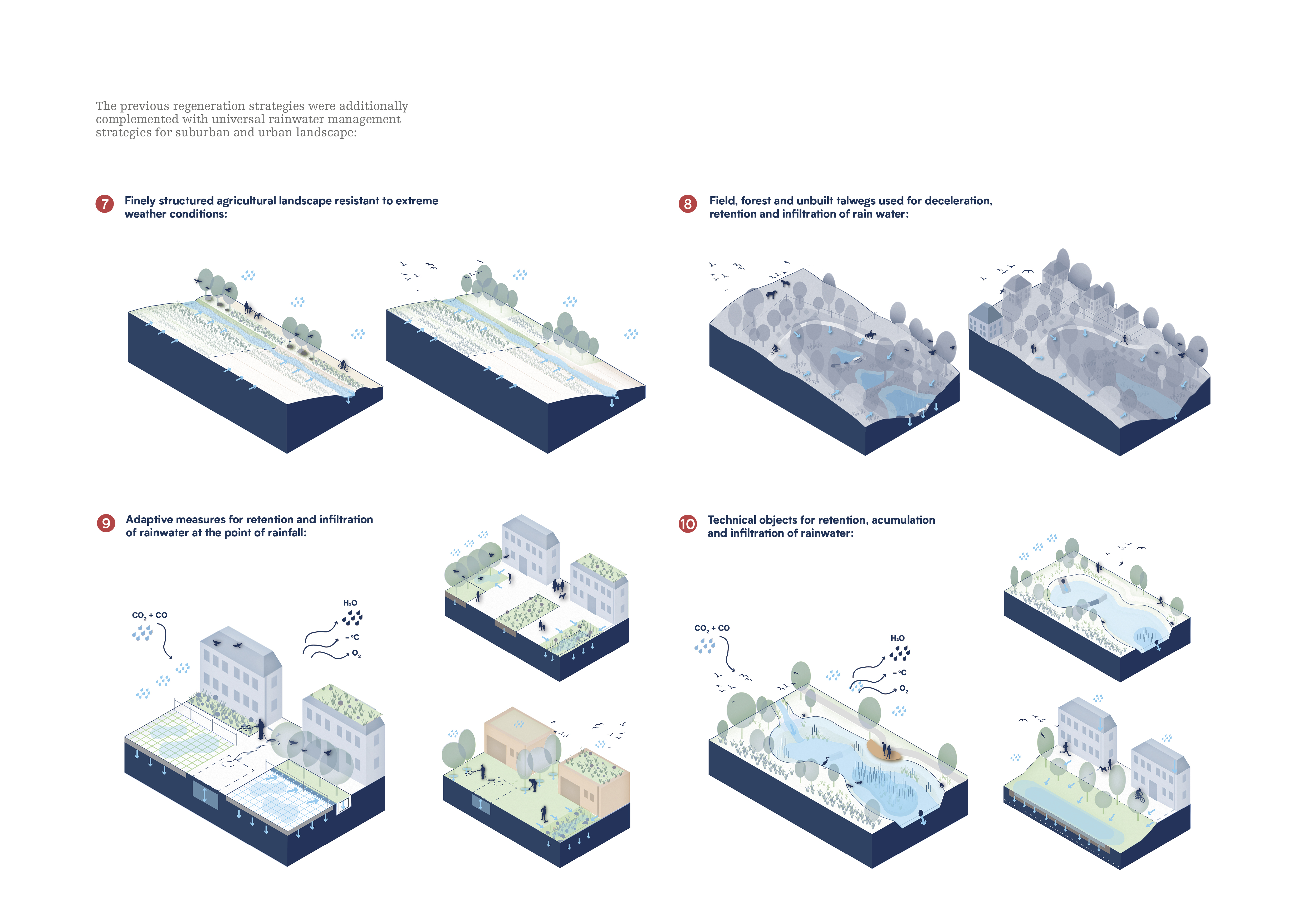
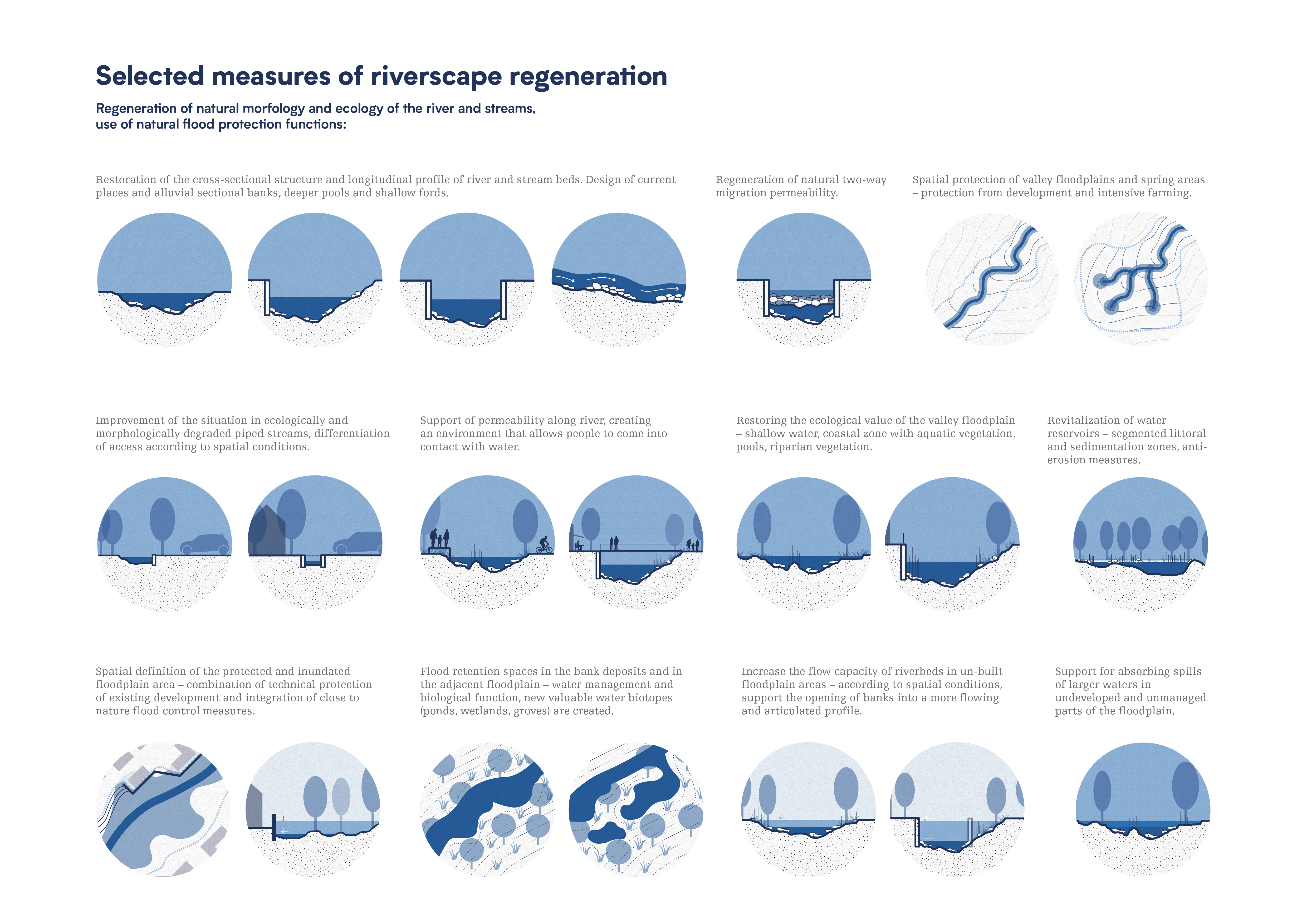
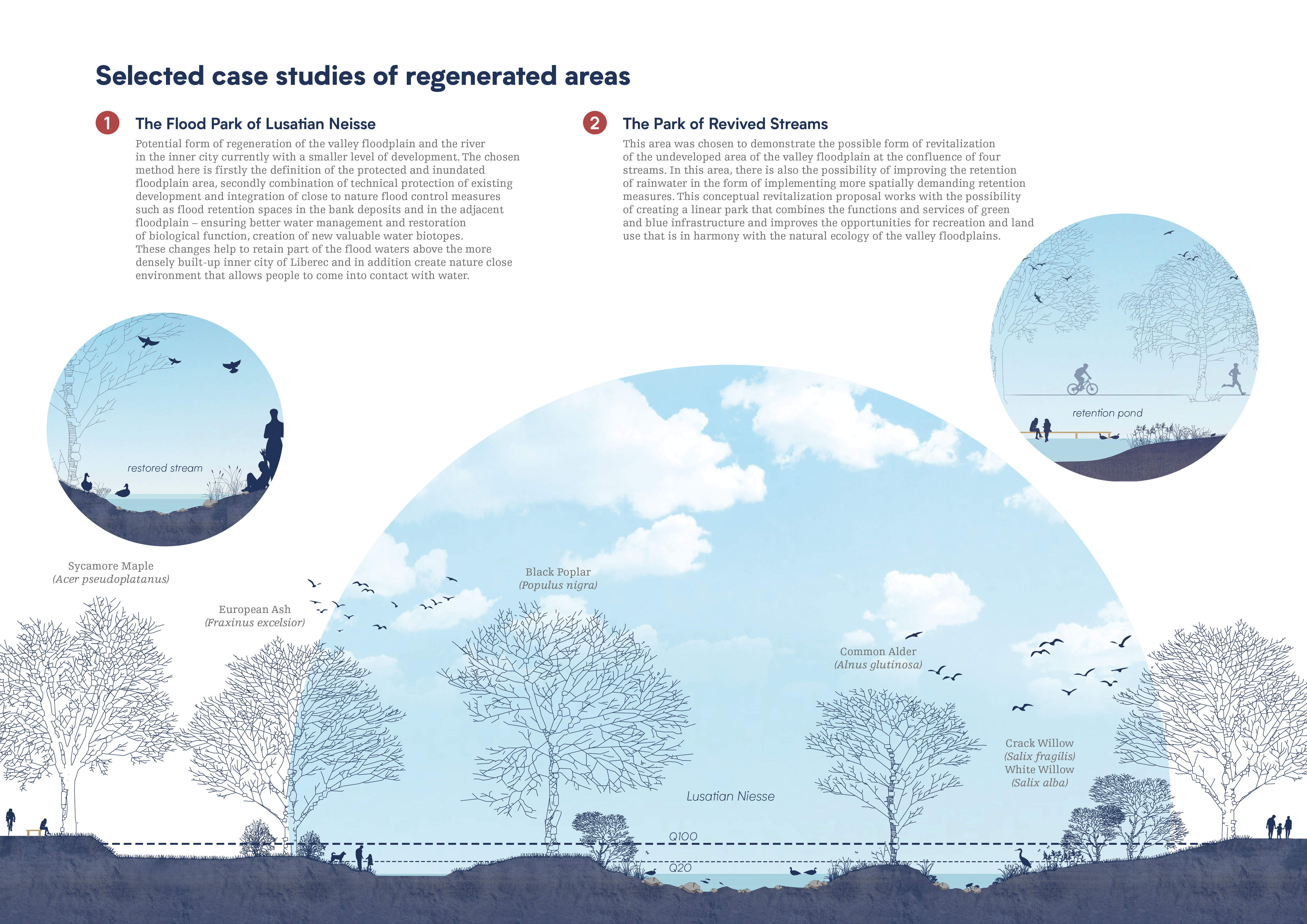
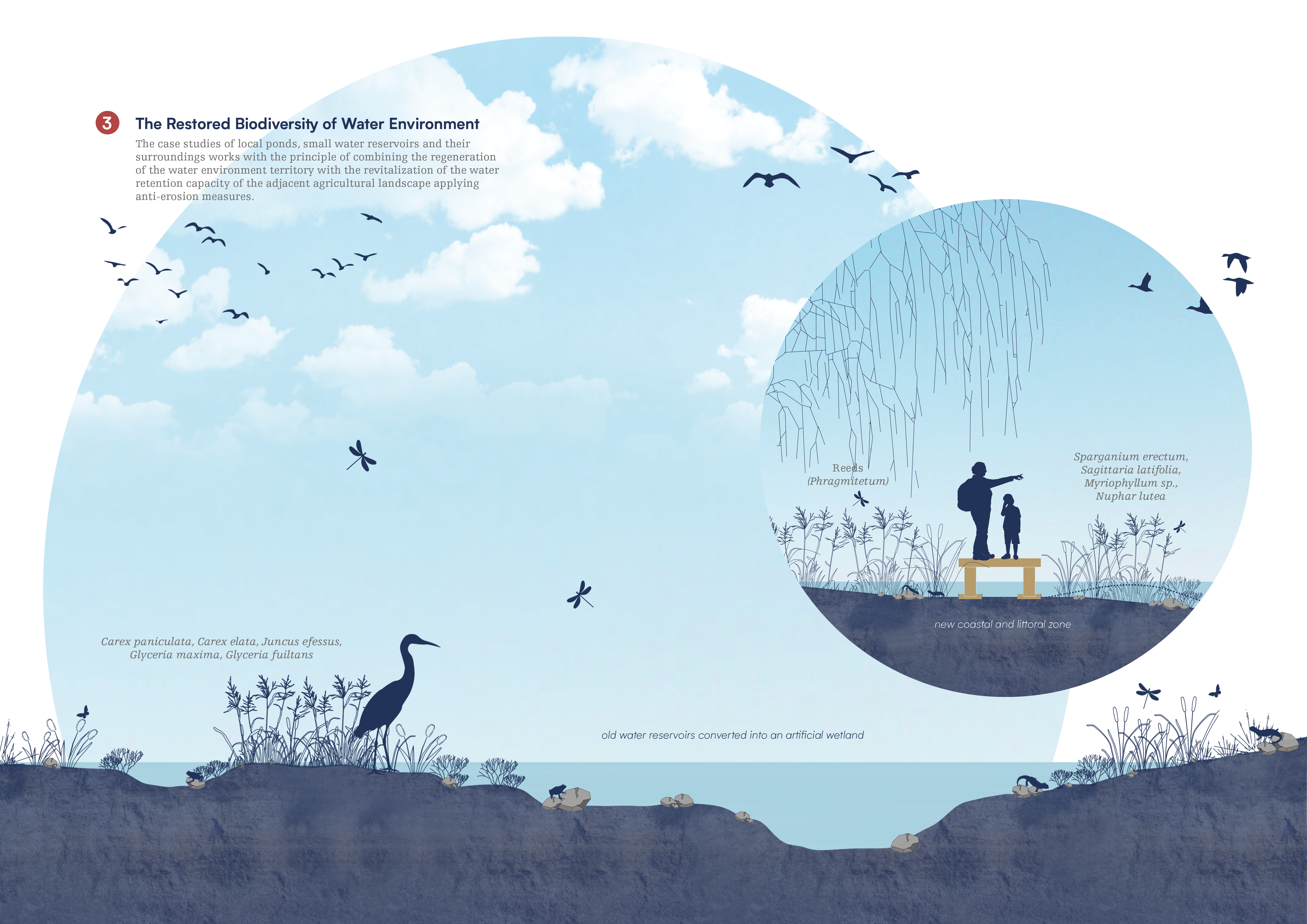
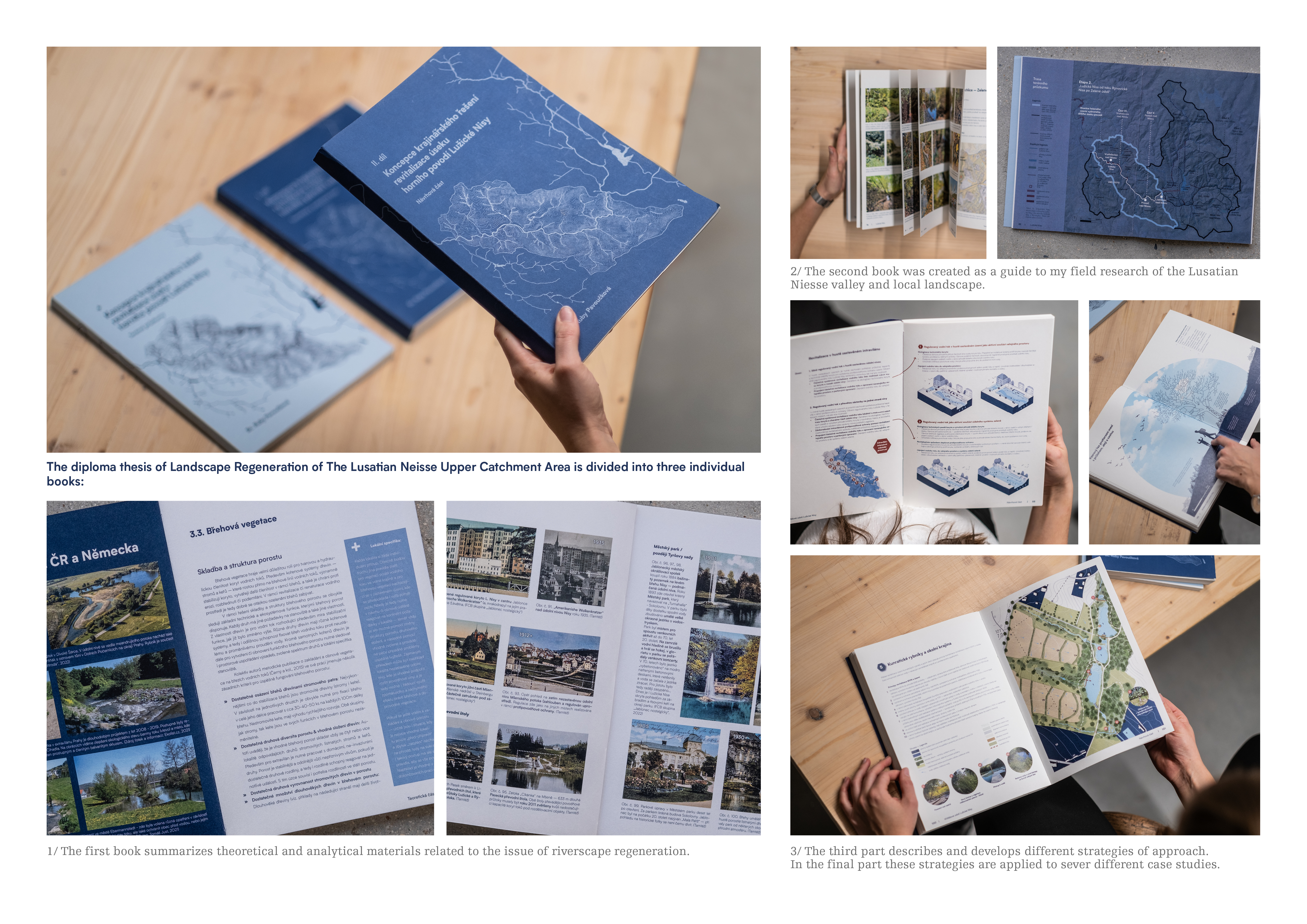
The first part of the project was composed of analysis of the entire upper catchment area of the river – apart from analysing natural conditions and the current state of local flood risk and its causes, I also studied in detail how the river and adjacent system of streams have shaped local landscape, as well as industry and economy over time. It was clear then that mere regeneration of the river will not completely solve the problems with the disrupted water regime, caused by the altered state of natural areas and the dysfunctionality of water system with countless regulations. The most effective answer in the thesis seemed to be development of a comprehensive concept of regeneration for one entire sub-catchment area. As a result, the second, design part of the project, was about finding appropriate forms of flood protection as well as of the alarming need of improving the retention and infiltration abilities of the landscape. Considering the current character of the valley floodplain and the river, in my opinion, the biggest untapped potential of „nature close“ flood protection lies in the regeneration of selected parts of yet undeveloped valley floodplain below the center of Liberec and combining it with regeneration of the altered nature of local forests and fields in the sense of improving its ability to retain water and positively influence local microclimate. Based on that, I designed various regeneration strategies that were custom designed for the character and limits of the concerned type of location. In the end, I created a workbook about the field surveys which enabled me to add a part about case studies in the final process, where I chose seven locations and proposed concepts of regeneration based on the diverse developed strategies and measures.