-
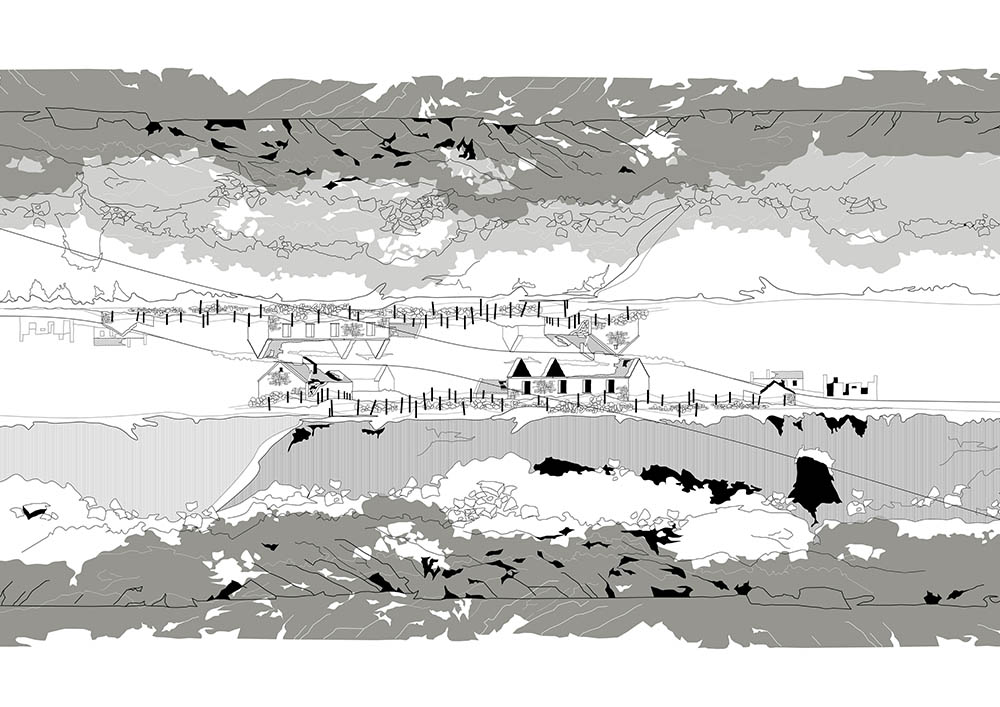
Cover Image
-
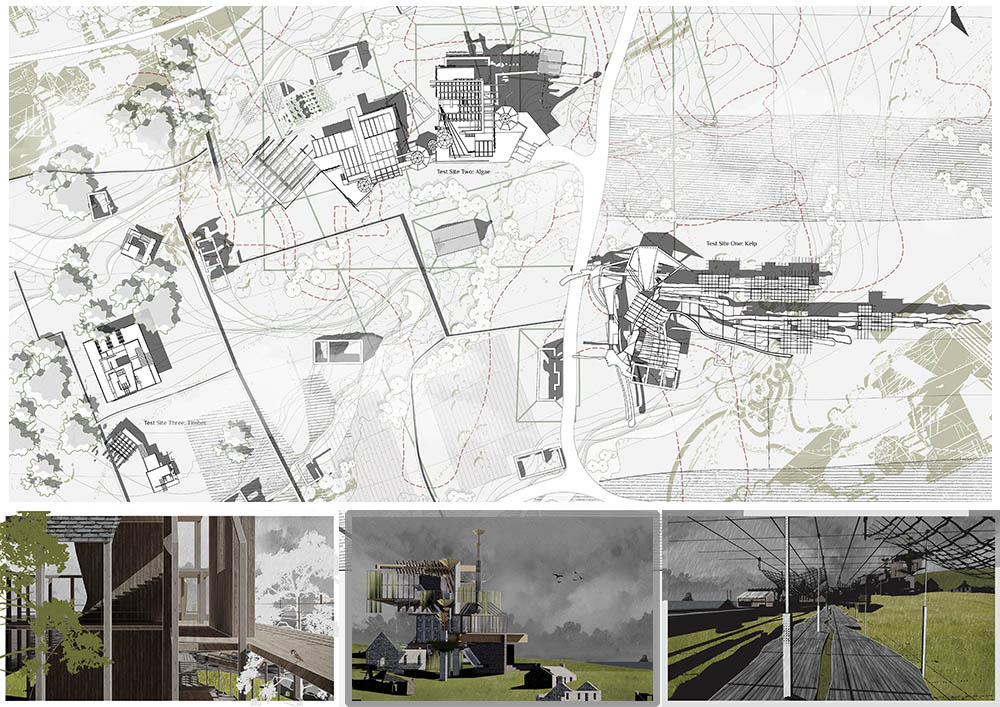
Site Plan show the three ecological test sites
-
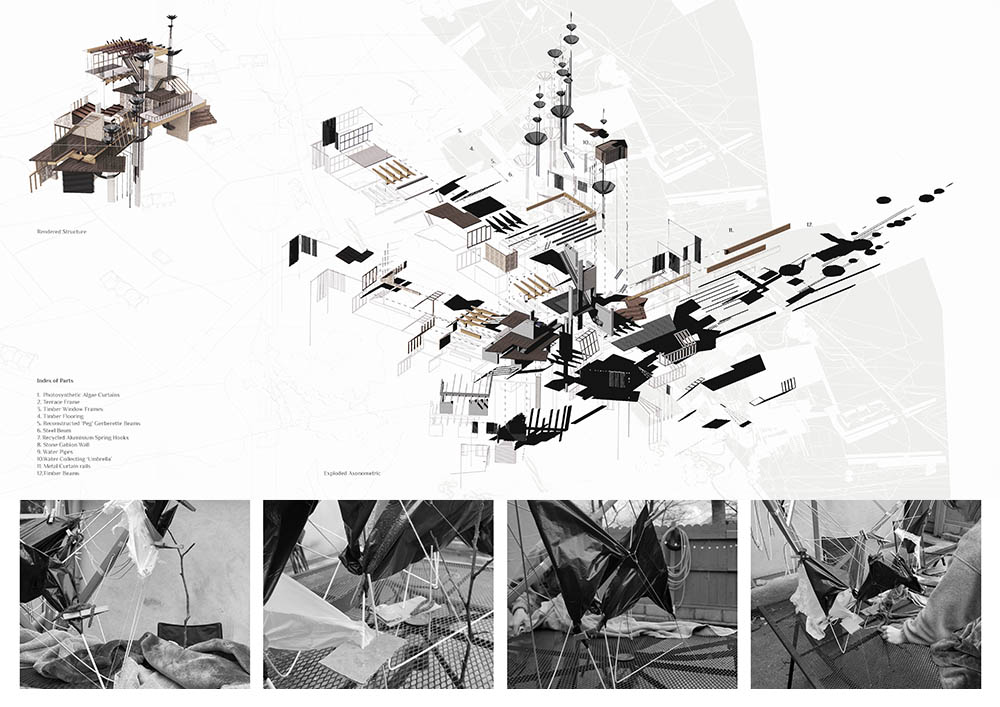
A Manual of Parts - Test Site Two Exploded Axonometric
-
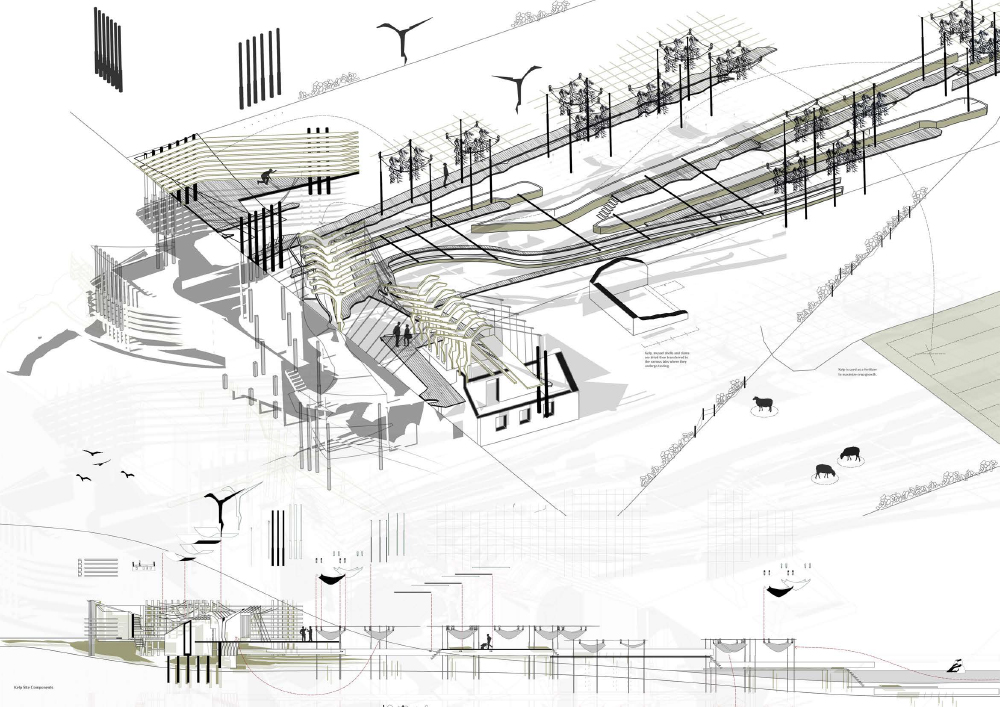
Aerial Section of Test Site One
-
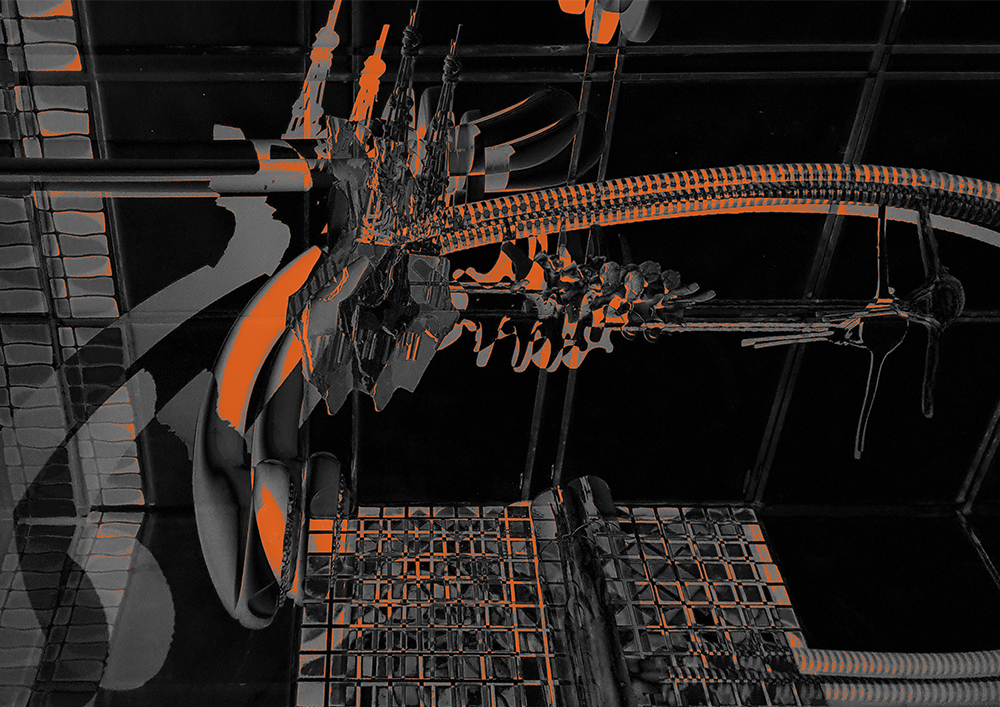
Domestic Devices - Re-imagining Models as a method of testing the limitations of design
-
Inverted Landscapes - Elevation Drawing Inishark's Coastline
-
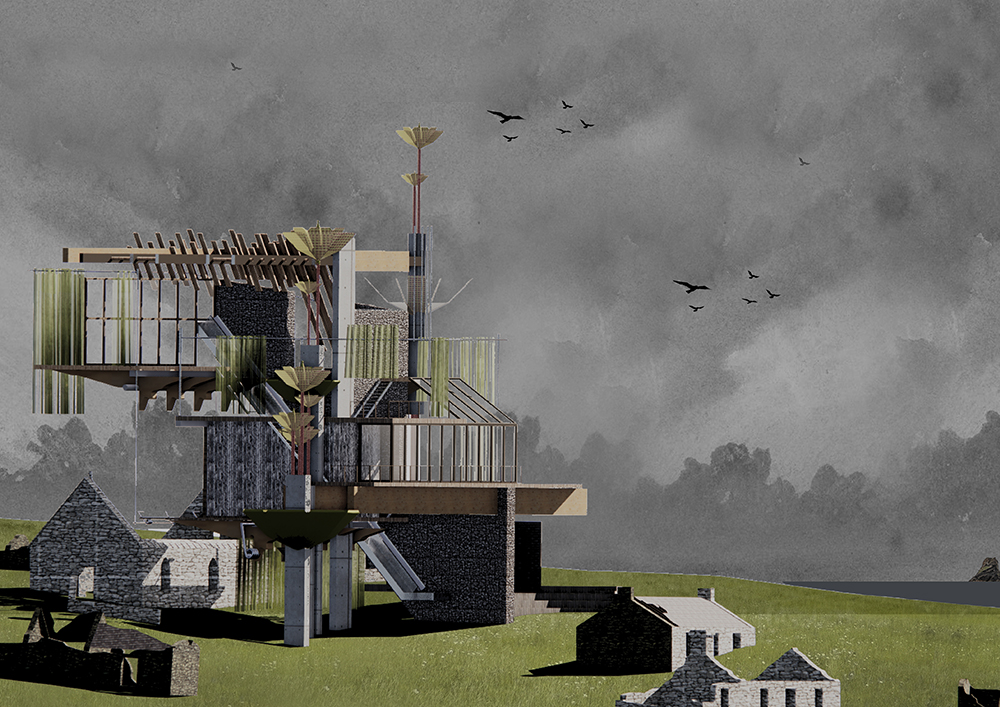
Render of Test Site two hanging over the ruins
-
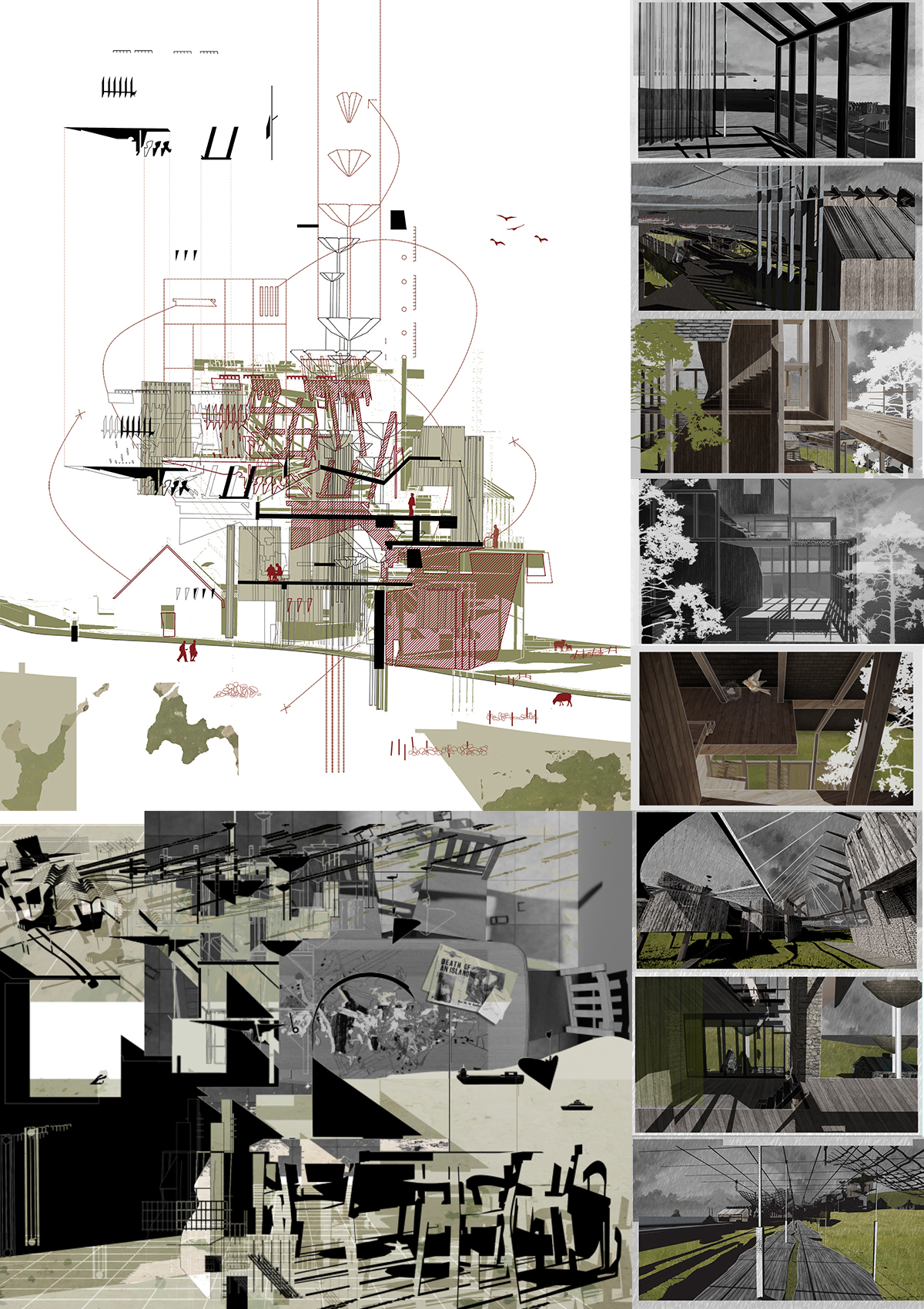
Project Panel
-
The Inhabitable Eco-Sphere
Katie Hamilton, Katie Hamilton. Inishark, Ireland
-
Name of work in English
The Inhabitable Eco-Sphere
-
Name of work in original language
A Manual for Sympoiesis
Prize year
Young Talent 2023
-
Work Location
Inishark, Ireland
-
Author/s
Katie Hamilton, Katie Hamilton
-
School
School of Engineering and Architecture, SEFS - University College Cork & Munster Technological University.
Cork, Ireland
Young Talent 2023 YT Nominees
The Inhabitable Eco-Sphere
A Manual for Sympoiesis
Program
Education
-
Labels
Nature · Architecture
This project actively responds to the ecological crisis by exploring the potential of the island landscape to become a testing ground for new design methodologies to be investigated. We achieve this by challenging the human-centric attitudes that currently dictate our approach to design.
This project puts forward a new framework for biocentric design by establishing a collaborative environment for creative visionaries to investigate the potential relationship between design and the natural environment. To achieve this, the project proposes three ecological design labs on the remote Island of Inishark off the coast of Connemara. The subject of discovery being investigated at each of these test sites will constantly change however for the purpose of this project we proposed three emerging design technologies to initiate the ambitions of the site.\nWhile the materials studied within these test sites will inevitably change, so will the structural and programmatic requirements of the architectural structures. The fragmentation of the structures into their individual building components allows for a continuous reassignment of parts, giving opportunity for the site to evolve and develop with its needs. Such an approach inspired a material catalogue of the site’s architectural pieces which would serve as a compendium of information on the structural composition of the architecture. It also provided an opportunity for the site itself to become a didactic environment through which the process of reconstructing and reconfiguration could guide the designer. \nThere is no singular solution to the imminent environmental crisis. As a result the test site focuses on the benefits of collaboration across multiple disciplines, generating a greater flow of ideas and creativity. This approach promotes a more diverse design process, one that is more widely informed thus allowing for better design decisions to emerge. By acknowledging the island of Inishark as an experimental landscape, the aspirations of the project are translated through the architecture. Their structures evoke a certain dynamism that inspires hope thus allowing the role of the designer to become more responsive to the ecological crisis/mutation confronting us.