THE IRON RICE BOWL FACTORY
Giulia La Civita, Camilla Forina. Beijing, China
-
Name of work in English
THE IRON RICE BOWL FACTORY
-
Name of work in original language
Design strategies for a developing danwei
Prize year
Young Talent 2018
-
Work Location
Beijing, China
-
Author/s
Giulia La Civita, Camilla Forina
-
School
Architecture and Design - Polytechnic University of Turin.
Torino, Italy
Young Talent 2018 YT Nominees
THE IRON RICE BOWL FACTORY
Design strategies for a developing danwei
Program
Mixed use - Commercial & Offices
-
Labels
Aggregation · Facilities · Factory · Heritage · Office
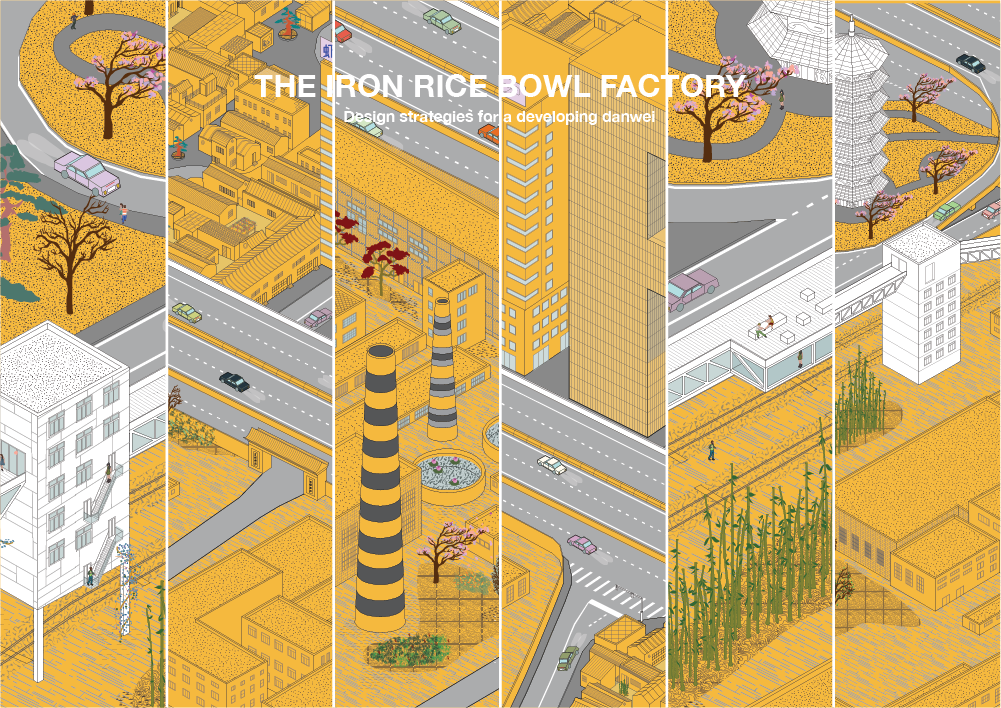
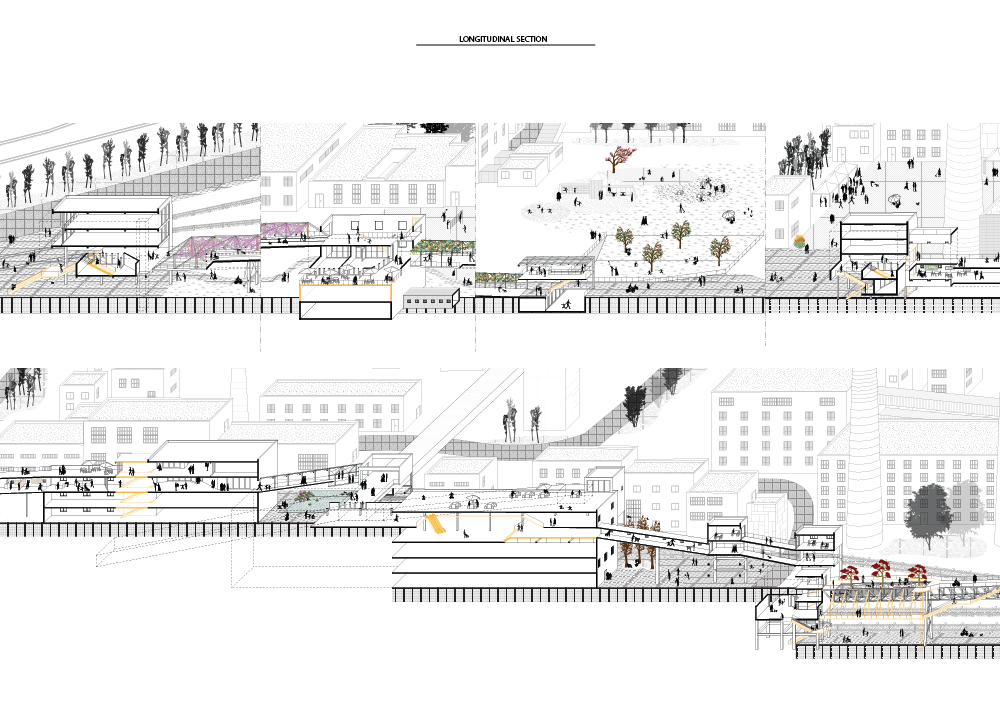
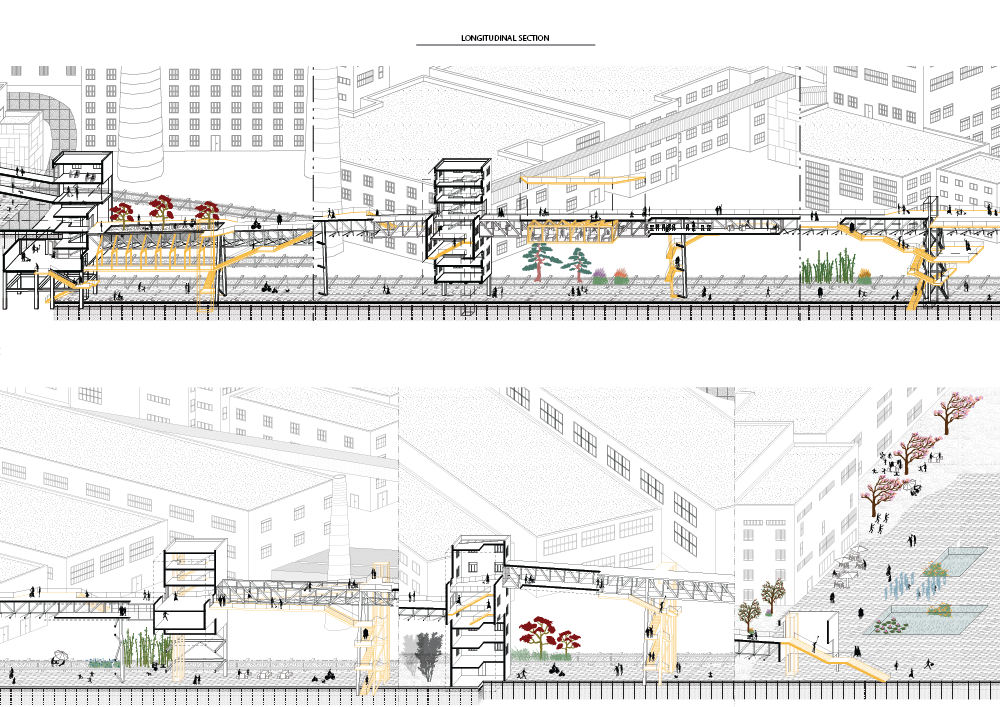
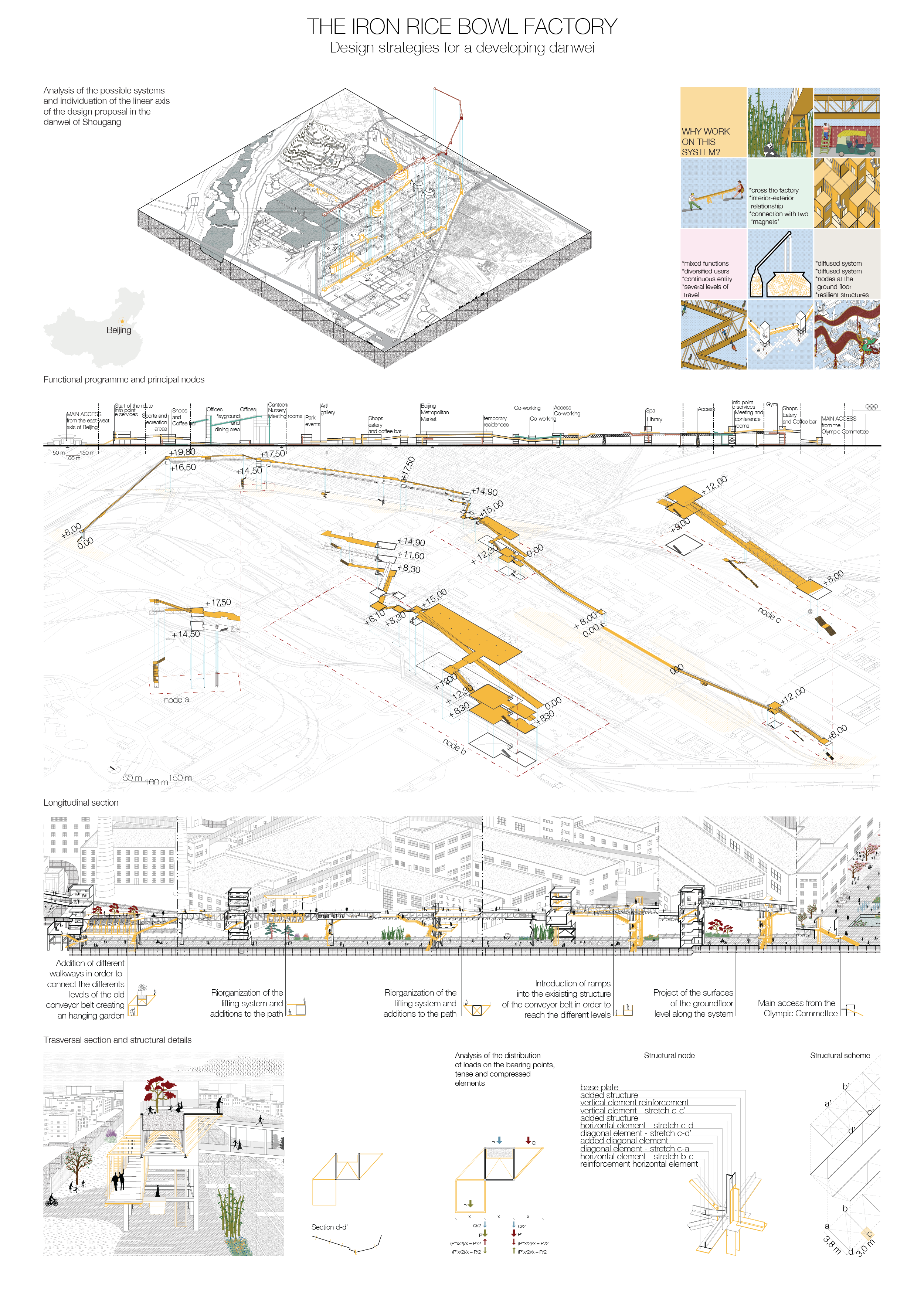
The work concerns the rescue of the danweis, the socialist work units, in a deeper reflection on how China should approach the protection and valorization of the cultural and architectural heritage of the Modern China, which really often over the last decades have been almost completely demolished.
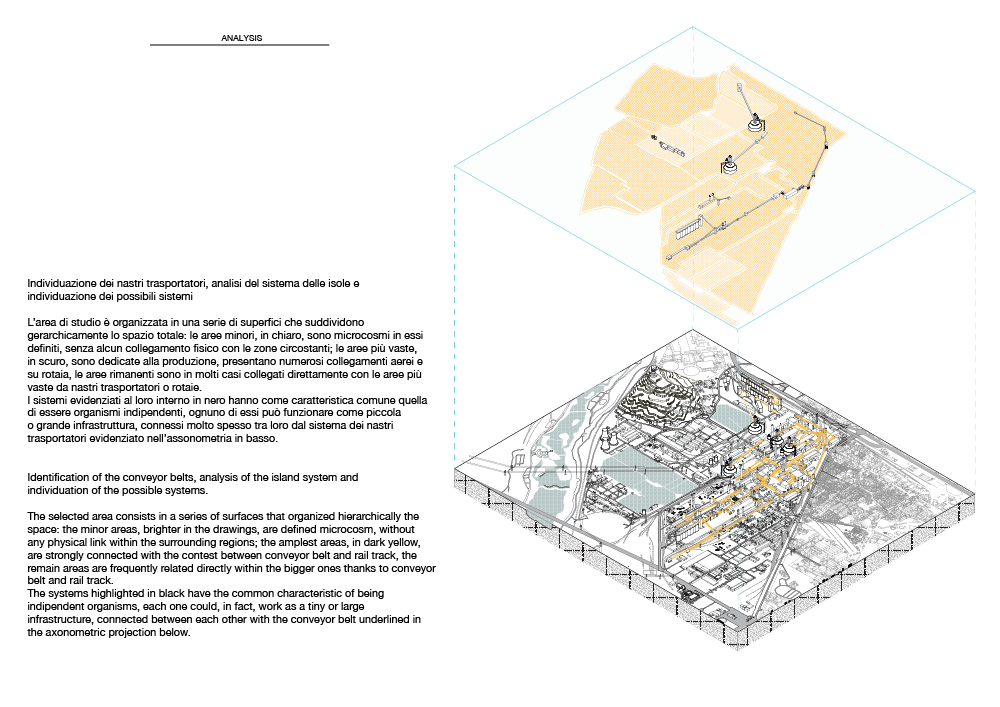
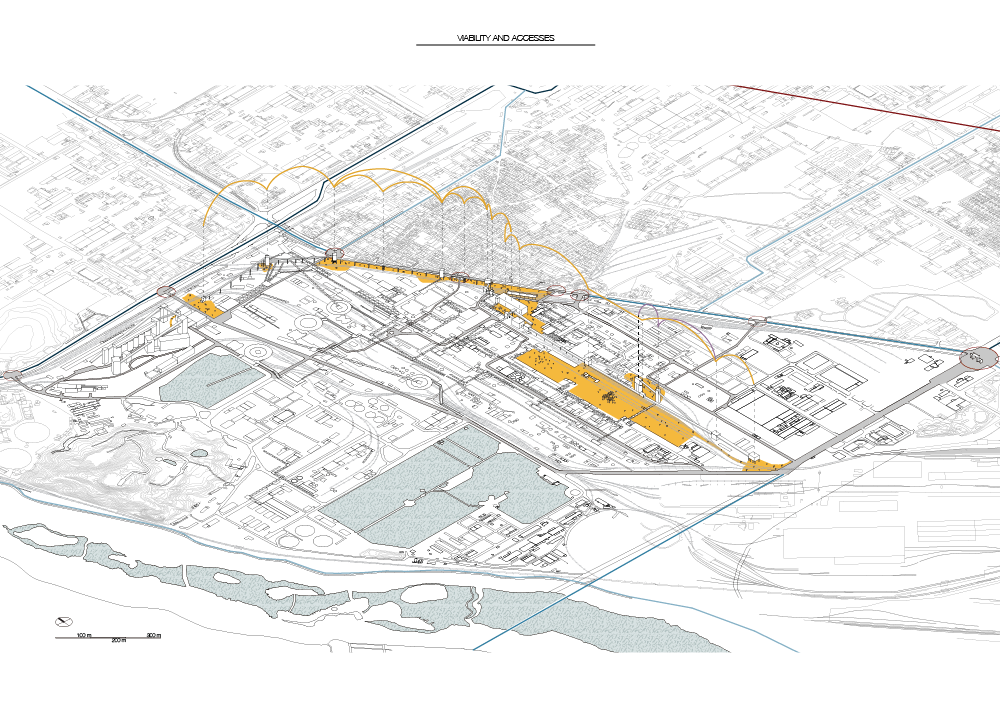
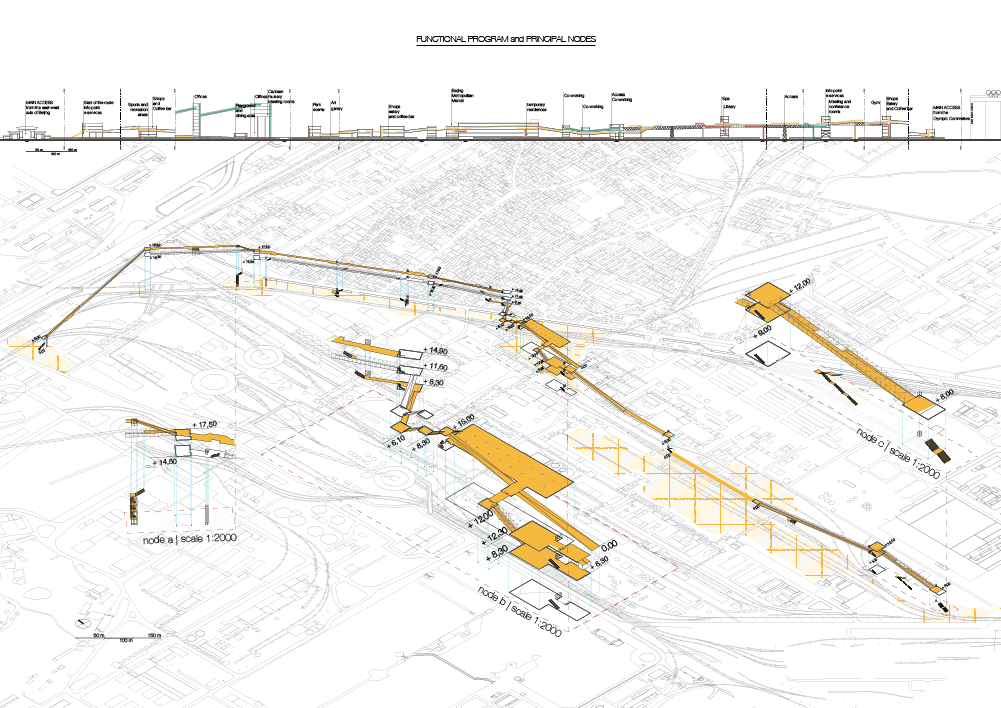
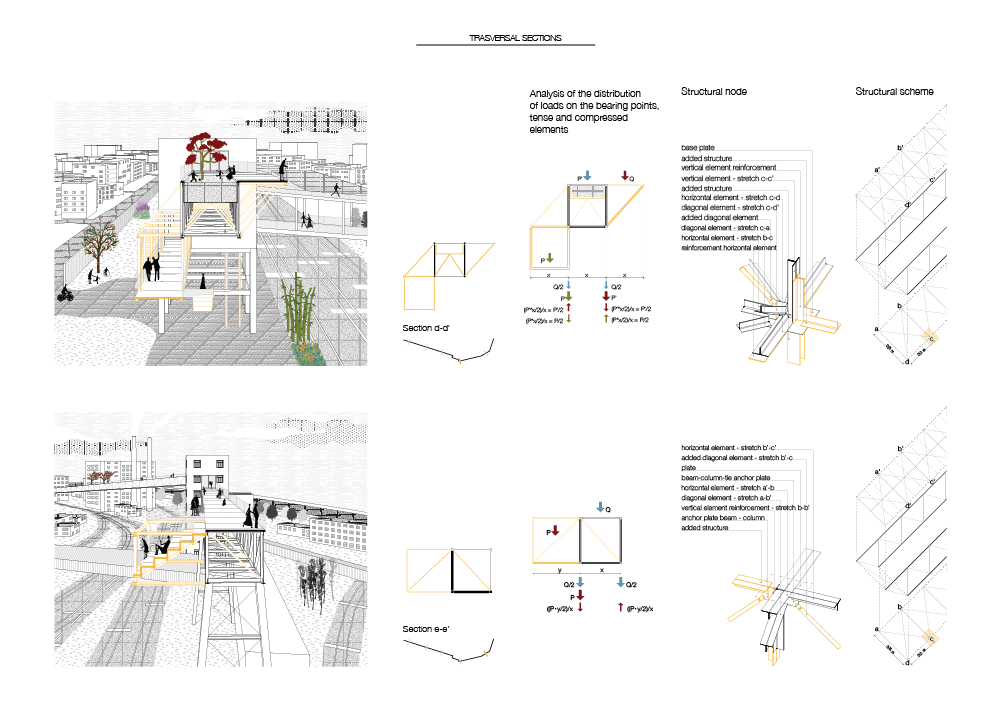
The design proposal isolates a significant linear axis composed of a system of conveyor belt converted in raised walkways that develop a widespread distribution within the area, facilitating the fruition of several spaces included inside the perimeter, improving and reactivating them. We tried to blur the layout with the surrounding through an interpenetration of the several heights of the path and the inner and outer spaces in order to allow the visitors to completely immerse themselves in the suggestion inspired from the site. The conveyor belts resulted wholly versatile from a structural point of view, thanks to their modularity and size, and became the heart of the design proposal, not just connection elements beneath the various levels. The analysis of the structural components and their degree of resilience has been essential in the definition of the possible design strategies, which have to be interpreted as the result of a careful investigation of the implication due to the context. The strong dichotomy of tangible and intangible aspects that constitute the framework of these work units have been partially emphasized, partially faded, in the attempt to highlight the essential peculiarities of this heritage. Therefore, the desire is to suggest the possibility of facing the reactivation of Shougang through particular and inclusive interventions, as an alternative to the all-encompassing character of the proposals forwarded thus far.